


“Anna said, ‘You’re an excellent nurse,’ and since then, I’ve never stopped believing in myself.”
These four simple words formed the foundation of a friendship that’s changed Anna and Nima's professional lives. Anna was a ward manager when they met, and Nima a band 5 nurse with a few years’ experience, but keen to advance in her career.
They’re speaking to RCN Magazine at University College London Hospital (UCLH), the place where they first met, to talk about the importance and power of mentoring in nursing.
As they talk over tea in paper cups, they agree that mentoring isn’t just about getting guidance from your manager. It’s a two-way street. And the lessons should travel in both directions.
How it started
Nima was working in the head and neck surgical unit when Anna started as her manager. Anna recalls her first impression of Nima.
“I saw an exceptional nurse,” she says. “She’s compassionate, kind, funny, with a real situational awareness of her patients, her ward and her team.”
But Anna also saw that Nima didn’t have enough faith in herself.
“My role was to encourage her. I held up a mirror up and went, ‘Look how great you are.’ I didn't do anything exceptional. She did it all.”
“I’m really shy,” Nima agrees. “I'm an introvert and I needed someone to bring me out of my shell. That was Anna.”

One of the key things Anna liked was that Nima wasn’t afraid to give her honest feedback.
“She was comfortable saying, ‘I don't think you're doing that right’ or ‘actually, that's not OK. As a leader, I found that so important. If someone can do that in a non-aggressive, non-threatening way, it makes all the difference.”
And Nima remembers appreciating how Anna was a hands-on manager. “She came to the shop floor. She listened, and showed me she valued my opinion.”
Being present and available are qualities Nima emulates now as a manager herself.
Two-way mentorship
Nima says she has many stories about how much Anna has helped her over the years. But she also recognises the importance of when their roles reversed, such as refreshing Anna’s skills with procedures like laryngectomies or tracheostomy when she first came to the ward.
Anna nods in agreement. “Your clinical skills can get a bit rusty when you haven’t used them in a while. But she took my hand and said, ‘Let’s do this together’. It was brilliant.”
Mentorship doesn’t have to be formal
For both of them, the keys to this kind of positive relationship are honesty, openness, and respect.
“In nursing, we’re all learning every day,” Nima says. “We learn from each other.”
“There shouldn’t be a hierarchy. It should be like this,” Anna says, gesturing to herself and Nima. “It’s a symbiotic relationship.”
A friendly face
Anna remembers when she leaned on Nima, too. “My clinical background is accident and emergency, but I left that post because I wanted to develop as a manager. When I started managing the ward I had huge doubts. I thought I’d made a mistake by leaving A&E. I remember phoning my husband halfway through the day and crying. It was Nima who picked me up.”
After working together for around four years, Nima moved on to a new job. Life is busy and years passed when they didn’t see each other, but they had a happy reunion through the RCN.

Anna had started to ramp up her interest in the activism work being done by the RCN, and joined a branch meeting. It was another role reversal in their mentorship relationship.
“I didn’t know what to expect,” Anna says. “Then Nima’s name popped up. It made me so excited. I relaxed straight away knowing I had someone I trust as a sounding board.”
Then at Anna’s first Congress in Liverpool in May 2025, Nima showed her the ropes. “I was showing her how to vote, encouraging her to speak on topics I knew she felt strongly about, and we sat together to discuss the debates.”
Finding a mentor
We ask Nima and Anna what advice they’d give their fellow nursing staff about finding a good mentor relationship.
“Make yourself available,” Nima says. “Be willing to ask questions. You can even go to the most senior person. Don’t ever feel that you're not enough.”
“Mentorship can sound like a very formalised process,” Anna says, "but it doesn’t have to be. Although you do have to find the right person.
“You need trust, but you have to build that, through being honest and being open to receive both criticisms and compliments.”
Anna has an interesting insight for managers. “It’s easy to not give enough attention to the exceptional people on your team, because they don’t rely on you as much. But these are the people you absolutely should help to develop and support.
“When you're my chief nurse, Nima, I will be delighted. I’ll be your deputy, no problem at all.”
My colleague, my mentor, my friend
Anna feels privileged to have helped Nima.
“Nima is the nurse that I'd like to be, if I'm really honest,” she says.
“To have supported someone on their journey in one of the most important careers we have in this country is incredibly humbling.”
We need to big each other up in this job
Now they’re not at the same workplace, they don’t speak every day, but that’s not a problem.
“The stars align, and we’ll meet again. Congress was a great example. We just converge,” Anna says. “Nursing is a massive profession, but quite a small family.
"We need to big each other up in this job. And that’s why everybody needs a Nima. She doesn’t realise the impact she has.”
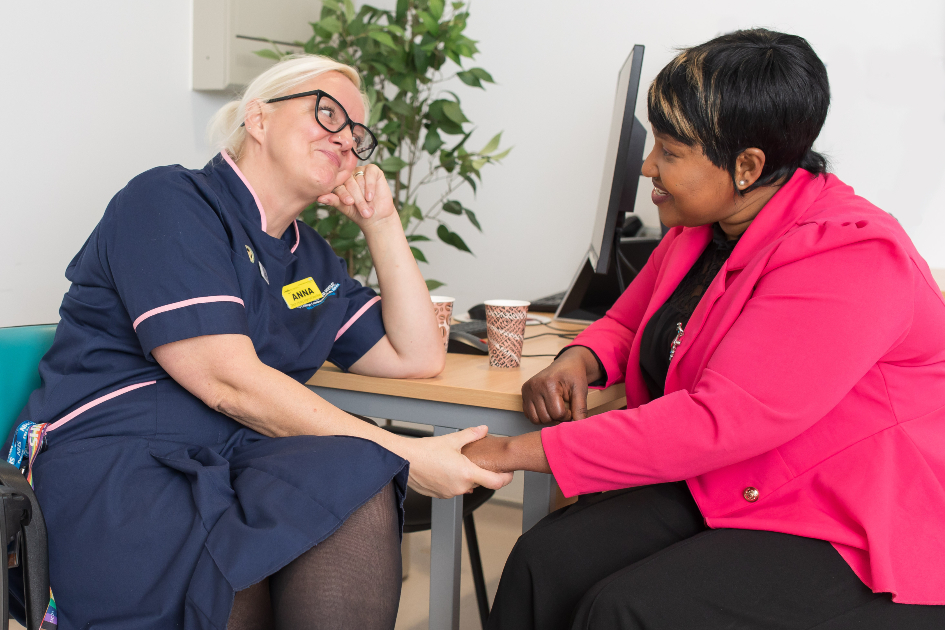
As we finish our chat, Nima turns to Anna and takes her hand. She has a simple but powerful message for her.
“You made me realise my potential, and that's why I will speak about you everywhere I go, because you remind me of who I am.
“You're my colleague, you're my mentor, you're my friend. You mean so much to me. Thank you.”
Get involved in mentoring
If you are interested in being a mentor or would like some help finding a mentor, you can contact the RCN Leadership Academy.


