


Nursing demands a lot, especially of your body. Whether that’s long hours standing by the operating table or making home visits, whether you're pushing equipment, transferring patients or bandaging a wound – it all requires strength and agility.
Nursing staff are prone to musculoskeletal injuries, especially when there’s time and staffing pressures. It’s one of the most common reasons for sickness in the NHS.
It’s never too late to start building up your strength
We asked physiotherapist Kelly Kilmartin-Disson to create a calm and controlled workout, especially for nursing staff, based on five strengthening exercises.
The best bit? It'll take you less than 10 minutes to complete.
“It’s never too late to roll out the exercise mat and start building up your strength," says Kelly. “Even if you haven’t exercised in years, start slowly, stay consistent and you’ll start to see results.”
Watch our video below and give it a go.
The workout
These five exercises are low impact – they only use your body weight – and all you’ll need is an exercise mat to get started. The workout focuses on your deep stabilising muscles, which will improve your posture, support your joints and help prevent injury.
Include weights and resistance bands to give yourself an extra challenge
“When you feel ready to progress, you can easily adapt the workout to include weights and resistance bands too, to give yourself an extra challenge,” advises Kelly.
Tap or click the picture for each exercise to see how to do it.
Exercise 1: glute bridge
This is a great exercise for strengthening – it’ll build muscle in your glutes and core that will help support your lower back.
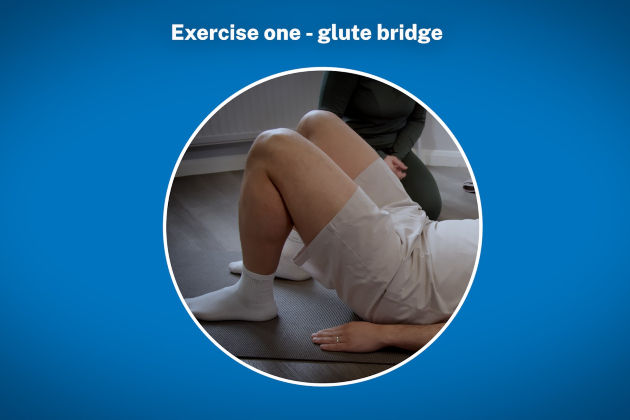
Ready to progress: this exercise can be adapted very easily – with or without equipment. Kelly suggests starting with both legs, then trying the exercise using one leg when you feel stronger.
Exercise 2: dead bug
Maintaining a strong core will help support your back and prevent injury. With this exercise, you can control how much you’re working your core by how far you stretch your leg.
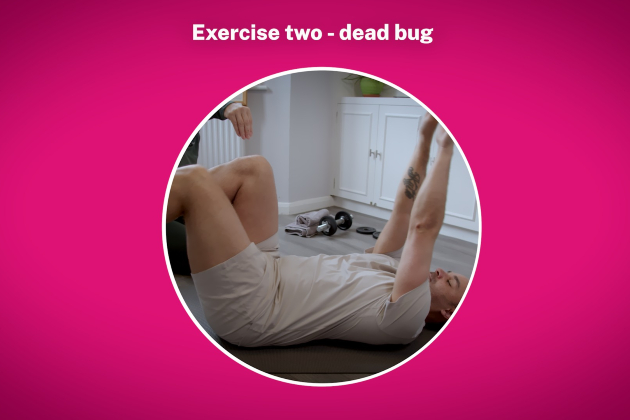
Ready to progress: once you’re comfortable doing two sets of 10 to 15 reps, you could add in a light weight or resistance bands.
Exercise 3: superman
This is a great all-over exercise which will work your core, lower and upper back, and glutes.
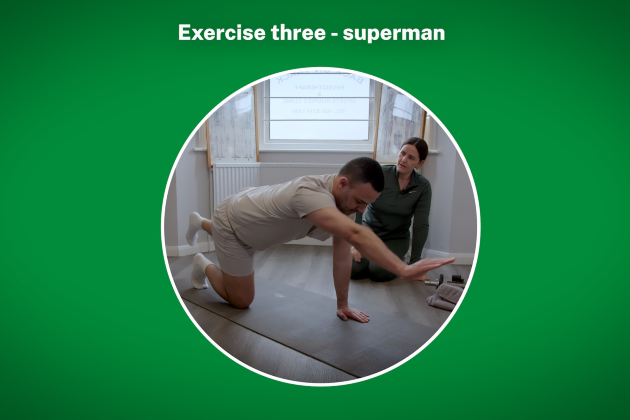
Ready to progress: try lifting a weight when you raise your arms or introduce resistance bands.
Exercise 4: swimming
This Pilates move will give you better muscle tone in your upper back, neck and shoulders.
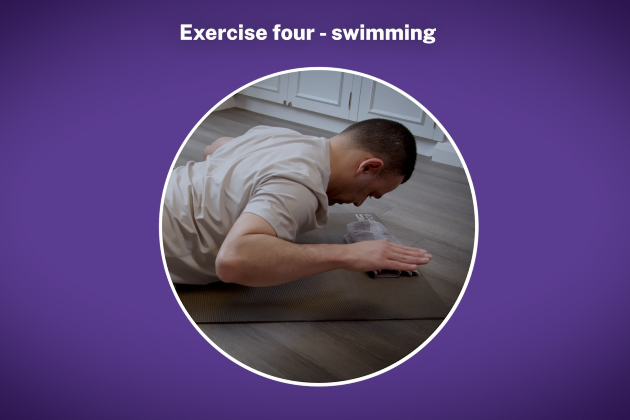
Ready to progress: as this exercise targets a few muscle groups, you may need to start with a lower number of repetitions then gradually increase as you get stronger. Kelly says: "See how many reps you feel comfortable with first and build up from there."
Exercise 5: squats
This exercise will improve your lower limb strength and stability by working your quads, hamstrings, and glutes.
Some people will be able to do this exercise more easily than others. Watch our video to see how squats can be adapted so you can still benefit, no matter what level of agility you’re starting from.
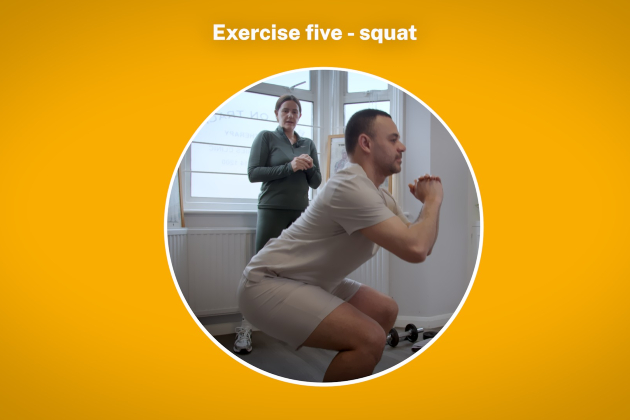
Ready to progress: if you begin with supported wall squats, try progressing to free standing squats. If you began with free standing squats, when you're ready, add in some light weights.
Any questions?
How many reps will I need to do?
Start with one set of 10 to 15 repetitions (reps) of each exercise, or as many as you can manage, then aim to build up to two sets of each. You may need to start with a lower number of reps for the swimming move.
When you first start a new workout, it’s important you can feel the correct muscles working and to make sure you maintain a pain-free range. Do this by exploring how many reps can you comfortably do without causing discomfort, or how many can you do before you begin to lose your technique.
“Everyone will have a different starting point. If you can manage eight or nine reps before it gets uncomfortable, start there and build up,” says Kelly.
How regularly should I repeat these exercises?
You’ll ideally need to do this workout three to four times a week to start feeling the benefit. But Kelly says to remember that quality is better than quantity. Focus on a strong execution of each exercise rather than powering through them.
When will I start to feel a difference?
Muscle tone improves at a different rate for everyone, and it will largely depend on how consistent you are.
You’ll know you’re building strength when the exercises get easier, you feel stronger and you’re able to add more reps into each set.
Do I need to complete the whole workout?
If you don’t have the time to complete the full workout, choose the exercises that target your needs. These might be areas where you feel weaker, stiffer or where you feel a niggle or ache.
I’ve missed sessions, will I need to start again?
Kelly advises that you’ll get the best results when you’re consistent. However, life is busy, and even with the best intentions you’ll miss sessions from time-to-time. “It’s fine to have a bad week but try not to let that turn into a bad month,” encourages Kelly.
Just pick up from where you left off. If you find the exercise feels different, reduce your reps slightly and build back up from there.
I'm not sure I'm fit enough, what else can I try?
If you’ve already got an injury or you're suffering with pain, you can start with our five simple exercises for nursing staff.
These stretches can help relieve tension and rebuild your strength. When you feel ready, come back to try these strengthening exercises to help prevent further pain.


