


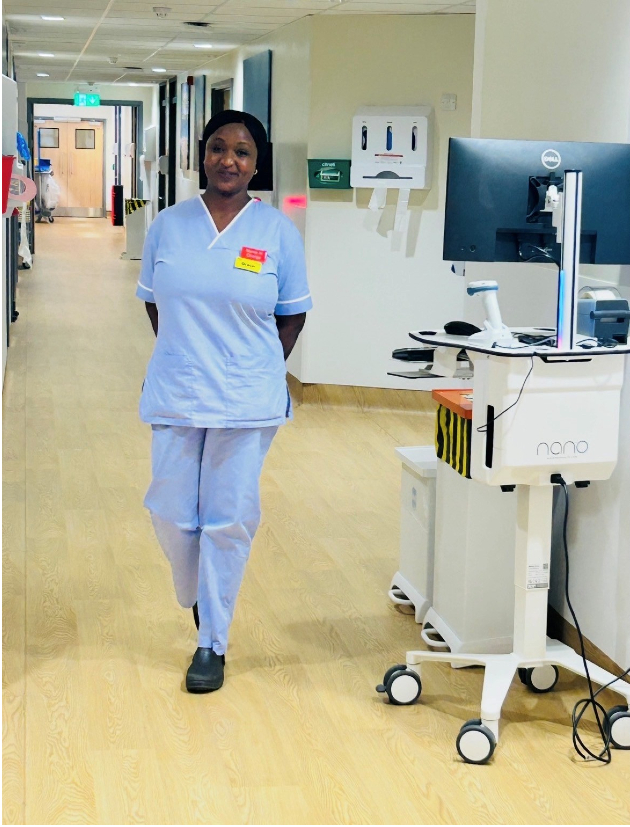
When she started in cardiothoracic services at King’s College Hospital, London, Grace Munyanyi realised there was a lot to learn. Life as a nursing student had prepared her for plenty of eventualities, but not everything.
Here, still early in her career, Grace reflects on what she wished she’d known before entering her fast-paced specialty, supporting patients with cardiovascular and thoracic conditions, including pre- and post-operative management, for heart and lung surgeries.
Why do you love being a cardiothoracic nurse?
The ability to make an immediate impact on patients’ outcomes, where early recognition and timely intervention can save lives. I enjoy the combination of acute care skills and patient education, especially helping patients to understand more about their medications, lifestyle changes and symptom monitoring. It’s rewarding to see them improve, sometimes rapidly, and know you played a role in that.
I strive to be a consistently good nurse, by delivering clinical competence and compassionate care to patients with confidence and resilience.
What’s the biggest difference going from being a student to a newly registered nurse (NRN)?
The level of accountability and clinical responsibility. I feel some of the most valuable lessons in nursing are those we only truly understand once we’re in practice. As a nursing student, you’re supervised, guided and corrected before mistakes fully land. As an NRN, you’re accountable, have a Nursing and Midwifery Council PIN and you’re known as a registered nurse.
This can feel intense, because patients can deteriorate quickly. They might develop arrhythmias or chest pain.
What do you wish you'd done differently when you started out?
I sometimes hesitated or overthought whether something was significant enough to report. In cardiothoracic nursing, even small changes can be critical, so I learned that it’s always better to speak up early.
I also wish I’d structured my communication more clearly using tools like SBAR (Situation, Background, Assessment, Recommendation), particularly when speaking to doctors or during handovers.
Starting out can feel overwhelming, particularly in intense specialties like cardiothoracic nursing. I’ve learned that asking questions isn’t a weakness, but a strength that protects patient safety and accelerates growth. It’s about learning to become safe and reflective, and it’s our professional responsibility.
What do you wish someone had told you when you were starting out?
It’s OK not to know everything – but it is important to ask.
Communication is just as important as clinical skills. In cardiothoracic care, clear, timely communication with the multidisciplinary team can have a direct impact on patient outcomes. Equally, being able to explain complex information to patients and families in an understandable way is invaluable.
Kindness is more than a pleasant, even therapeutic gesture – it can reassure a patient how much they matter, build trust and restore dignity.
How do you manage time pressures on the ward?
Time management is a skill that develops, rather than something you immediately master. Balancing complex patient needs, documentation and multidisciplinary communication can be challenging.
Learn to prioritise effectively and remain adaptable, especially when caring for post-operative cardiac patients whose conditions can change rapidly.
How do you cope with the emotional weight of nursing in such a high-pressure specialty?
The emotional impact on nursing staff must be acknowledged. Caring for critically unwell patients, supporting families and sometimes facing loss can take a toll. Developing emotional resilience, debriefing with colleagues and practising self-care are key parts of sustaining a long, healthy career.
What do you think is the best way of increasing confidence?
Confidence grows with experience, but reflection accelerates it. Taking time to assess experiences, whether positive or challenging, has been crucial to my development. It allows me to recognise progress, identify learning needs and continuously improve my practice.
What else would you say to new cardiothoracic nurses?
Always prioritise patient safety, and develop a strong understanding of electrocardiogram interpretation early, as it helps you recognise life-threatening arrhythmias quickly.
Know your cardiac medications in depth, such as beta-blockers, anticoagulants and diuretics, including their side-effects.
Time management is also essential, as patients’ symptoms can change rapidly. Don’t underestimate the importance of patient education. Helping patients understand lifestyle changes, medication adherence and symptom monitoring can significantly reduce readmissions.
While it might just be another shift to you, it could be the worst day in a patient’s life, so have compassion, empathy and kindness, and remember you’re more capable than you think.
There are moments early in your career where imposter syndrome and self-doubt can creep in. But with support and a willingness to learn, you’ll realise that you're capable of handling responsibility and making a meaningful contribution to patient care.
Find out more
- RCN Magazine explains cardiovascular disease.
- What a manager wishes he'd known before starting.