

While working as a district nurse, Kath Williamson became increasingly aware of a growing number of people living with severe obesity who were isolated and housebound.
Their physical, psychological and social care needs were significant, and Kath could see their care was inadequate, involving a fragmented range of services.
“I felt I was doing a really bad job,” says Kath, now a senior clinical nurse specialist in bariatric care in the community.
“Although care was in place – district nursing, occupational therapy and specialist equipment – this didn’t necessarily equate to good outcomes for people. It’s also costly, which is fine if people are helped to live how they want, but I felt I was just managing symptoms rather than helping people live meaningful lives.”
Surely we can do better than this?
Kath recalls a housebound patient with a body mass index (BMI) of 100 (a healthy range is 18.5 – 25, see below) suffering with a severe abdominal wound. Excess weight can lead to skin breakdown due to poor positioning, difficulties with hygiene and limited access within skin folds.
A key challenge for nursing staff in managing skin conditions associated with obesity is the lack of an evidence base to guide care once skin breakdown has occurred.
“I’d spend over an hour changing dressings for this person’s abdominal wounds caused by poor positioning, only for them to slip off almost immediately,” says Kath. “This was a daily task. I’d done training on manual handling and tissue viability, but I felt I was missing some vital evidence.”
Kath found herself thinking “surely we can do better than this?” and set out to do something about it.
Body Mass Index (BMI)
It’s estimated that 21 million UK adults will be obese by 2040 with costs relating to obesity projected to reach £9.7bn by 2050.
The most widely used method to check healthy weight is BMI. There are limitations to using BMI because it measures whether a person's carrying too much weight but not too much fat.
For example, people who are very muscular, like professional sportspeople, can have a high BMI without much fat.
Also, different cut-off points should be used for different ethnic groups.
A further limitation of BMI is that it doesn’t indicate where people wear their weight, such as around their hips, stomach or legs.
This is an important consideration for people living with severe obesity, as it affects their function and care, particularly mobility and manual handling. The NHS has a useful BMI healthy weight calculator.
As a guide, if BMI is:
- below 18.5 – underweight range
- 18.5 to 24.9 – healthy weight range
- 25 to 29.9 – overweight range
- 30 to 39.9 – obese range
- 40 or above – severely obese range.
Evidence to enable better care
Kath set out to gather her own research on the unmet needs of people with severe obesity, their poor health outcomes and associated stigma.
“Bariatric, sometimes called plus-size care, is an emerging issue,” says Kath. “Although ‘eat less, move more’ has been the go-to government response, this has had limited success at a population level, meaning nursing staff are increasingly caring for people with very severe obesity with little evidence to guide that care.”
- Read next: Weight loss jabs: the essentials
Changing diets, easy access to cheap, fast and calorie-dense foods, lack of movement, home working, fewer manual day-to-day tasks along with a whole list of socio-economic and psychological factors have led to the majority of the population living with excess weight.
Obesity contributes to many health issues including type 2 diabetes, cardiovascular disease, strokes and several cancers as well as links to depression and mental illness, so it’s vital people can be supported to lose weight.
“The food industry knows that food is a quick way for us to feel good, boost mood and feel rewarded,” says Kath. “They’re constantly inventing new ways for us to consume more; for people with severe obesity, we need to see the whole person and try different ways of helping them.”
I'm committed to research and raising the voice of nursing
Determined to improve outcomes for people living with obesity, Kath completed a master's degree in weight management. Following this, she later completed a PhD focusing on the needs, experiences and costs of caring for people living with severe obesity in the community.
“I never set out to be in research,” she says. “But I could see how the lack of specific weight-management services was impacting housebound people living with obesity. This is why I’m committed to research and raising the voice of nursing – the largest profession in the NHS – as evidence to support services in the future that’ll have a positive effect and improve lives.”
Holistic approach
Research is now Kath’s main role alongside her NHS job supporting nursing staff and patients in community-based bariatric care.
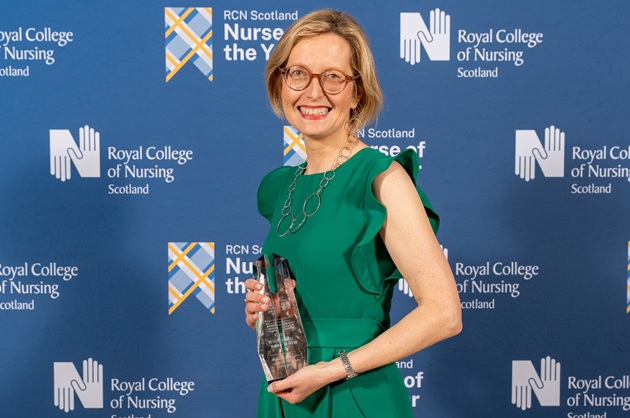
She’s the first nurse in Scotland to be awarded the Chief Scientists Office Postdoctoral Research Fellowship and aims to develop a programme of work that will lead to improved access to weight management for housebound people with obesity.
Kath suggests all nursing staff take a holistic approach for people living with obesity.
“In my experience, no one sets out to have obesity,” she says. “I don’t know anyone who wants to be housebound with someone taking them to the toilet. Sometimes trauma and abuse might be involved, as well as feelings of isolation and stigma, so if we could treat the whole person rather than just focusing on their weight, that would be a step in the right direction.”
Kath’s five tips to help nursing staff
For many people living with obesity, accessing health care can be a negative experience, but Kath shares her tips relevant for all nursing roles.
- Learn about weight stigma. Understand the issues for people living with obesity and reflect that in the language you use. For example, use person-first language (living with obesity rather than obese) and show empathy. Public Health Scotland has a great weight stigma resource hub.
- Take a holistic approach. Try to understand the whole person. Although nursing staff might be treating a specific symptom – for example diabetes or lipoedema – these often develop over time, so understanding someone’s journey, which can often involve trauma, will be a good starting point.
- Speak about weight in a sensitive way. Nursing staff might not always feel confident speaking to patients about weight, because they feel uncomfortable or don’t want to stigmatise. It can help to start with a question to build trust like, “is it ok to talk about your weight?”, or “how do you feel about your weight?”. If the person doesn’t want to talk about it, respect that. They’re more likely to seek support if it doesn’t come with judgement.
- Understand trauma. When speaking to people about weight, be sensitive to the individual without making assumptions about their lifestyle, diet or mental health. For many people, very excessive weight gain isn’t just about food, it’s one way of coping with difficult feelings.
- Upskilling and resources. Currently, there’s no national guidance for bariatric care, but the National Back Exchange has resources on manual handling for staff. The UK Coalition of People living with Obesity is an advocacy and peer-support group where people living with obesity can find support, and nursing staff can signpost too. Also, it’s worth finding out about your local weight-management service and how to refer.


