
News
RCN Scotland calls for new Scottish government to prioritise workforce planning
We are calling on the new Scottish government to prioritise workforce planning in its efforts to deliver health and social care reform.
Connect with us:


Today we have published our fifth ‘The Nursing Workforce in Scotland’ report which highlights that nursing staff have seen little meaningful improvement to health and care services, whether in the NHS or independent sector, including on fixing the workforce crisis. While the nursing workforce has grown, the gap between planned and actual staffing remains, with little adjustment to account for the continued increases in demand for services.
Significant challenges remain on retaining the current workforce and attracting the nursing workforce of the future. Our report provides the new Scottish government with a clear picture of the current nursing workforce and where action is needed to meet the ambition of shifting the balance of care.
The reduction in the working week to 36 hours from 1 April 2026, increasing sickness absence rates and the number of nurses who are nearing retirement age and, more worryingly, leaving before the age of 50, all increase the number of nursing staff needed and pose a significant threat to the future workforce.
The average sickness absence rate for nursing has continued to increase, reaching a high of 8.3% from April to December 2025, more than double the NHS Scotland absence target.
In the year to March 2025, nearly one fifth of registered nurse leavers in the NHS were in their twenties (16.9%), more than one in five were in their thirties (20.8%), and 16.7% were in their forties, compared to 14.0%, 15.0% and 13.8% respectively five years ago.
In the community nursing workforce, the skill mix is being eroded. With only a quarter of registered nurses within district nursing teams holding the district nursing qualification that is designed to equip them with the additional knowledge and skills to manage complex caseloads.
Colin Poolman, Executive Director, RCN Scotland, said:
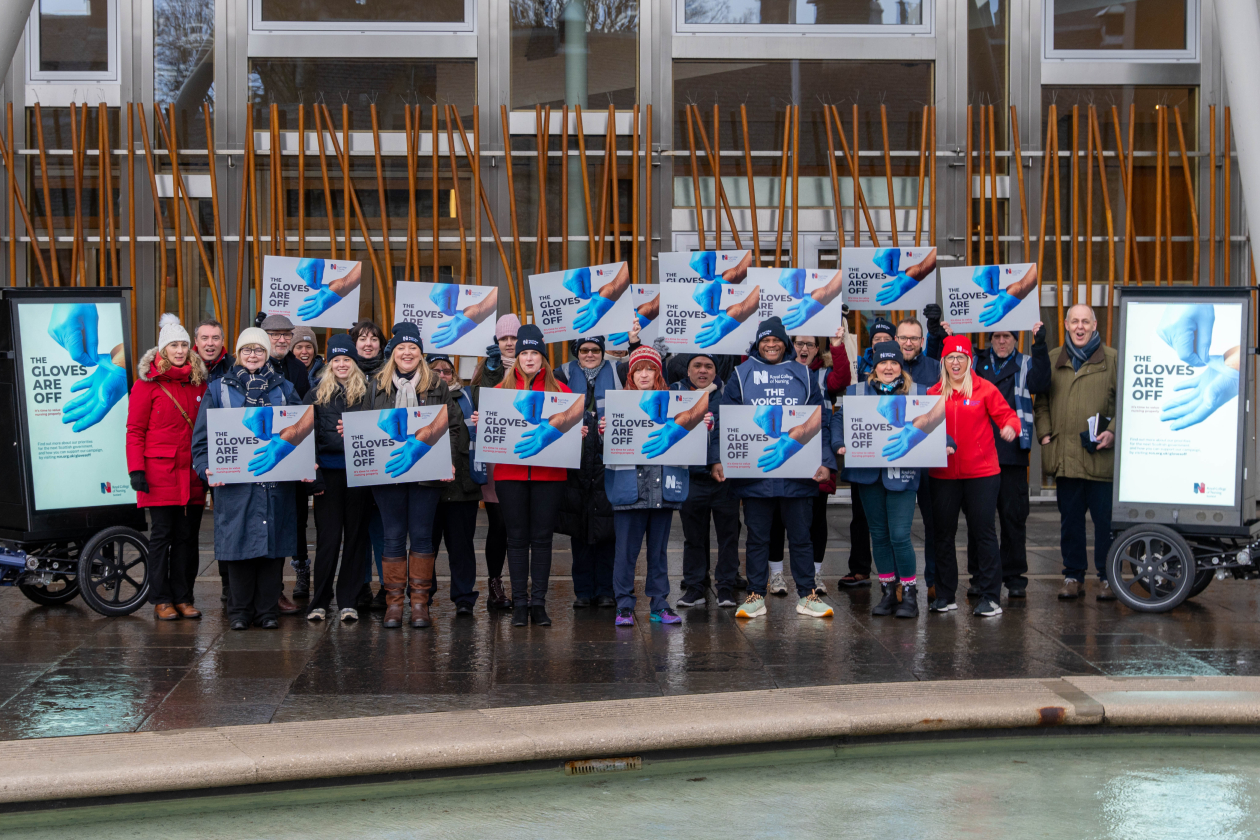
“Our election campaign message was simple – ‘the gloves are off, nursing is ready to be heard’. It remains as a warning to the new Scottish government, nursing staff are demanding action, not warm words and promises.
“The analysis in the report underlines just why our members took such a forthright stance during the election campaign.
“Scotland cannot build the sustainable nursing workforce it urgently needs by asking staff to continue to work short-staffed and under relentless pressure while feeling demoralised and undervalued. We need a grown-up discussion about the future of our health and care services, one that is not simply based on the political points scoring and politicisation of our health and care services that has characterised the past.
“Nursing is too often seen as a cost rather than the investment it truly is. Nurses are highly skilled professionals, providing 24/7 care and working with more responsibility than ever before.
“The new Scottish government must show that it is committed to valuing nursing properly, starting with fully implementing the recommendations from the Ministerial Nursing and Midwifery Taskforce – because Scotland’s health depends on it. Implementation of the 44 recommendations in the taskforce report must be top of the new Scottish government's agenda, because, before the election period, progress has been slow and frustrating.
“The evidence could not be clearer – when there are enough nursing staff, with the right skills, in any care setting, patients are safer.”