

News
‘You’ve just got one chance’: Terri Gazi on the heart of hospice care
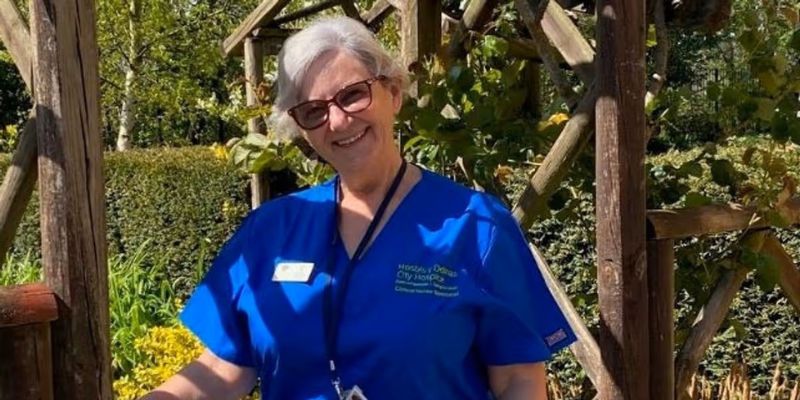
Terri Gazi was 14 when she decided she was going to be a nurse. “I had a major operation and I saw the way all the nurses worked there,” she recalls. “They were always so jolly and happy and kind. After that spell in hospital, that was it!”
Connect with us:


Terri began her nursing career in 1975 and had been a nurse for 50 years when she retired in 2025. “I started off as a staff nurse on the surgical unit and then I moved to Cardiff and worked in the intensive care unit at Llandough Hospital, which I really enjoyed.”
Her career then took her to Saudi Arabia, where she worked in intensive care. “Saudi was quite a tough place to work in terms of the support there,” she remembers. After a few years, she returned to Wales, became a general practice nurse while raising her son, and completed a Master’s degree. “My dissertation was on breast cancer testing and genetics and after that I was fired up and went to work at Velindre Cancer Centre, which I enjoyed – it’s a lovely place.”
Finding her place in hospice care
After a spell at a hospice in Pontypridd and as a palliative clinical nurse specialist in Newport, Terri finally landed at City Hospice in Cardiff, where she became lead nurse. “I enjoyed everywhere I worked, but City Hospice felt like home,” she says. “The consultant there, Dr Capel, started at the same time as me and so we worked together to make changes and it was great.”
One of the biggest challenges of her career came during the COVID‑19 pandemic. “A lot of community services disappeared as people were self-isolating or working from home, so that was very difficult,” she reflects. “Everyone in the team was worried about their own relatives while they were working in the hospice – but we stuck together and helped one another, and we had amazing support from the district nurses and the GPs.”
That sense of togetherness shaped the team’s resilience. They made time for social events, and Terri brought in sweet treats every Friday. “It’s a great way of helping people cope, believe me, and it helps to ease the burden.”
It’s no surprise, then, that the team is one of the things she misses most. “I miss working with them because they're all different personalities, and no day with them was ever the same, which I loved.” She also misses the patients and families she supported. “It’s just such a privilege to go into their homes at the worst time in their lives,” she says. “You get to meet so many pets and babies and so many different personalities, it’s honestly just amazing.”
Lessons from end-of-life care
Working so closely with people at the end of their lives changed her outlook. “You learn that little things, like queueing at the supermarket or being stuck in traffic, really don’t matter,” she says. “You can see how much stress and grief people go through and it puts everything into perspective.”
Terri believes there’s a misconception that hospice care is all “doom and gloom”. For her, it’s about helping people live well with a diagnosis. “The team offers comfort, dignity and quality of life – and all patients are unique so care is tailored to their individual needs.”
Thinking about the future of end‑of‑life care in Wales, Terri believes more financial support is essential, especially for community services. “There’s still a burden of care on relatives when people remain at home – and unless you’ve got somebody who’s willing to look after you at home, then you can’t stay there. That’s the bottom line.”
A royal honour
Terri was recently recognised in the King's New Year's Honours – something she never expected. “It was quite a surprise. I knew nothing about it until I had the letter. I'm still not sure who nominated me.” She laughs as she remembers her initial panic: “Because it said, ‘On His Majesty's Service’, I thought it was to do with prison or something. I was scared to open it.” When she finally did, she was relieved – but sworn to secrecy. “It said ‘in the utmost confidence’, so I wasn't allowed to tell anybody at all. It was really difficult with my family at Christmas, not being able to tell them.”
For Terri, the honour isn’t hers alone. “I think it's a recognition for the hospice community as a whole. And I think it belongs not just to me, but it actually belongs to City Hospice and the team there. Because I don't think I would have got it if I hadn't been there with them.” She adds, “I wish every single one of them could have had one. They all deserve it. Every one of them.”
Retirement has given Terri time to become a long-term fosterer of Alf. “He’s an 11‑year‑old mad Spaniel with arthritis. Unfortunately, his owner could no longer care for him.” Alf was on his way to a sanctuary when Terri, who volunteers at the Cinnamon Trust, walking dogs for people who can no longer manage it, stepped in: “He was going from Swansea to Devon, so I just said yes.”
Alongside caring for Alf, she’s enjoying new hobbies. “I've started to learn to play the piano and I do Pilates.” She also travels regularly to see her two grandchildren in London. She still pops back to City Hospice to “touch base”, and imagines she’ll volunteer there in time.
Encouraging the next generation
Terri is passionate about encouraging nurses to experience hospice work. “I would say hospice care is for everybody,” she begins, before explaining why even a short placement matters. “In every aspect of nursing, you're going to meet death at some point. I think it's important for everybody to understand what they need to interact with relatives and patients who are actually facing it.”
Her own shift from intensive care to hospice work shaped her philosophy. “In intensive care, you fight so hard to keep people alive – I felt that we'd failed when they died. Whereas on the flip side, with hospice care, you feel a failure if you don't give them a good death. So that's the difference.”
That sense of responsibility is what drives hospice teams, she says. “You've just got one chance and it doesn't always work out, but that's life.” She reminds nursing staff that not everything is within their control: “Sometimes it's not what you're not doing. It's to do with the whole system and the support they get outside of what you're doing. You do your best and that's all you can do.”


