


Picture the scene. You’re on your day off and you see someone knocked off their bike. Do you help or walk on by?
Nursing staff save lives every day – you’re trained to respond swiftly and skilfully in moments of crisis, but providing care outside a clinical setting can raise questions about liability. Lucy Catterall, head of the RCN’s regulatory law team, covers what you need to know about being a Good Samaritan or volunteer.
What is a Good Samaritan?
A Good Samaritan, legally, is a bystander who voluntarily provides help to an injured or ill person. They act in good faith and without expectation of payment. An off-duty health professional falls under this definition.
What are my obligations as a nurse off duty?
There is no legal duty in the UK to be a Good Samaritan. This means you're not legally required to help a stranger in danger or distress, provide first aid unless you have a specific duty of care, or intervene in emergencies if you're just a bystander.
A duty of care exists if you’re in a professional role – for example, you’re a nurse on duty, or you’ve created the dangerous situation – say, you’ve driven your car into someone, or you’ve voluntarily begun to help.
In these circumstances, there is then an expectation to act with reasonable care.
Reasonable care means acting in a way that an ordinary prudent person would act in the same circumstances. It's an objective test, but for professionals they must meet the professional standard of care so their actions would be assessed against other professionals in their field.
How does the NMC Code apply to Good Samaritan acts?
While there is no legal duty placed on nurses, the NMC Code places a professional duty on registered nurses, midwives and nursing associates to provide appropriate assistance, within their sphere of knowledge and competence.
For example: if a nurse has an understanding of the impact of moving a person with spinal injuries, they may be expected to volunteer that knowledge at the scene of an accident.
Meanwhile, if a registered nurse with no midwifery training or knowledge came across a woman in labour, their professional duty of care may be limited to reassuring the woman, making her comfortable, calling an ambulance, and acting within their competence.
It’s important to not let fear stop you
doing a Good Samaritan act
What if I’m a nursing support worker?
Although health care assistants and assistant practitioners are not regulated by the NMC or any other professional body, NMC guidance is useful when considering best practice.
What if I’m newly registered or a nursing student?
Fundamentally, you must be competent for the task you are undertaking, and you must be able to undertake it safely.
Like a learner driver needs to be when they’re out on the road: with sufficient safeguards, so that while they're learning, they won't crash into someone without an instructor intervening first.
Saving a life at 30,000 feet: a case study
Newly registered nurse Lucy Copping stepped in as a Good Samaritan on a flight on her way to Tenerife for a summer holiday and helped to save someone’s life.
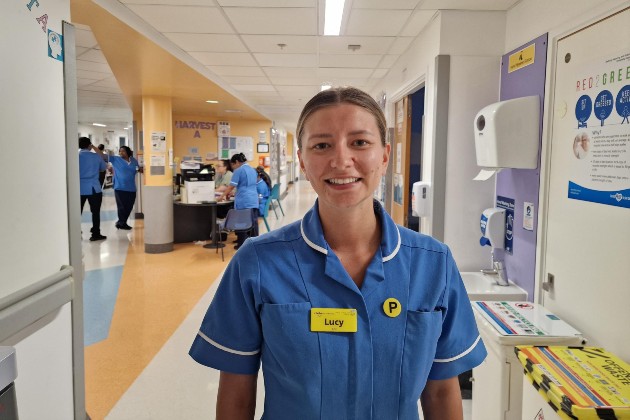
In the middle of Lucy’s first flight since becoming registered there was an announcement asking if there was a doctor on board. Nobody came forward but Lucy informed cabin crew she is a registered nurse.
A fellow passenger had fainted and was unresponsive but still breathing. An ambulance technician also on the flight noted the passenger had low oxygen levels and their blood pressure was dropping.
The passenger was slumped in her seat and just coming round, so Lucy used her nurse training and acting within her sphere of knowledge and competence, laid her across the seats to elevate her legs and raise her blood pressure.
The passenger’s oxygen levels improved, and her blood pressure began to stabilise. Once she was fully alert, she sat back up and the crew consulted doctors on the ground.
They gave two options: to divert the plane to Lisbon or continue the journey to its destination, and left the decision to Lucy. Based on the woman’s improvements, Lucy decided a diversion was unnecessary, so the flight continued, and the passenger remained stable until they arrived safely in Tenerife.
Lucy says: “I just did what I would do if I was at work and focused on getting the passenger’s vital signs in a good place. Once she was sat up and had some water, she felt better and I went back to my seat and told the cabin crew to come and get me if she deteriorated.
“Knowing she had recovered meant we could enjoy the holiday.”
What if I help and the outcome isn’t as I planned?
Say you try to help and the outcome isn’t what you hoped, in the very unfortunate situation that someone brings a claim, the SARAH Act 2015 (Social Action, Responsibility and Heroism Act 2015) is there to protect individuals in England and Wales.
What is the SARAH Act 2015?
Better known as the Good Samaritan law, it’s a UK law aimed at protecting individuals who act responsibly in an emergency to help others. This act extends to England and Wales only. Athough the act doesn't apply in Scotland or Northern Ireland, similar principles are considered by the courts in those jurisdictions.
It reassures people that courts will consider the context of their actions when determining if they were negligent and determines what steps that person took to meet appropriate standards of care.
It was brought in to give some reassurance to those who want to be a Good Samaritan, and remove some of the associated fear of consequences.
It’s important to not let fear stop you doing a Good Samaritan act. Don’t stray outside your competency and scope of practice, and always signpost if needed, but don’t let fear prevent you helping in the first place.
What RCN support is available?
The RCN indemnity scheme may cover you against the financial consequences of a claim against you for clinical negligence.
Generally, the scheme covers those acting in a Good Samaritan capacity, as well as those who are self-employed, such as members who don’t work under a contract of employment (including agency or bank workers) and volunteers.
As a member of the RCN, there’s no need to pay anything extra. RCN indemnity is automatically included in your membership fee, provided you meet the eligibility criteria.
It’s important to note that the RCN indemnity scheme is not a policy of insurance. It’s therefore very important that you check the terms and conditions as outlined in our comprehensive terms and conditions document.
Find out more and read about the RCN indemnity scheme here.
Further RCN resources
Have a look at our duty of care advice guide.