


“We’re all complex individuals with unique perspectives on life and death. But what we share is the human capacity to care,” says Laura Adams, a clinical nurse specialist in palliative care.
In her role as director of clinical services in a community hospice, Laura worked in partnership with a local care home to organise a special event for nursing students during this year’s Hospice UK’s Dying Matters week.
The final-year students were on a scholarship programme that gives them a chance to explore and contribute to local palliative and end-of-life care initiatives. It’s run by Lewis-Manning Hospice Care, where Laura works, alongside the Burdett Trust and Bournemouth University.
During Dying Matters week, the students interviewed five nursing support workers (NSWs) from different cultural backgrounds at Kingsman House Care Home. It was an opportunity to draw out the similarities and differences in approaches for palliative and end-of-life care from the perspective of the NSWs as professionals, but also as individuals.
We’re all individuals, with different beliefs and experiences
The event introduced the students to new end-of-life concepts and celebrated the work of NSWs, while helping to improve understanding about their backgrounds.
Laura says: “NSWs are commonly the people who deliver the most intimate care and they’re often the ones who are there when a person is actively dying. They have the skills to make people feel valued, but they don’t always get the recognition they deserve.”
How to talk about end-of-life care with patients and their families
Try not to be nervous, but always consider your general approach and tone when discussing cultural preferences and in all conversations when a patient is approaching end of life, says Laura.
- Read the room. Approach the situation with kindness and compassion. Where appropriate, be honest and open, and ask questions.
- You can read a person’s emotions, but you often can’t fix things. Instead focus on being there for them.
- Meet people where they’re at and remember the patient and the family might not be coming from the same place, emotionally speaking.
- Use your mediation skills – the patient may not want to upset their family, and the family may not want to upset the person receiving care.
- Remember you’re there to support a person’s wishes. Unless there’s an immediate risk, palliative care is usually advisory. We would never force someone to do something they’re not happy about.
- Communication may often be non-verbal so consider your delivery carefully.
- Consider your tone. People will remember how you say something more than the exact words you use.
- Try to have conversations about end of life early, so people can make decisions based on rational thought rather than their emotions. This could help to avoid unnecessary invasive procedures taking place.
- Remember that beautiful things can happen at the end of life. People find love, support and connection. The grief that follows a death is a mark of the love that existed.
- There’s no shame in feeling emotion – we’re all human.
- Be your authentic self, be inquisitive, feel emotions and speak on a human level. This is something technology can never do.
What the students learned
Laura Cassidy is in the third year of her registered nurse apprenticeship and is currently working as a health care assistant (HCA) in intensive care. Getting involved in the Dying Matters event gave her a new perspective.
“I spoke to a care worker who was Christian; her faith was really comforting to her,” she says. “When she works with someone who is dying, she has absolute faith they’re going to Heaven.
"I hadn’t thought about it like that before and it helped me understand how some people remain calm or don’t say a lot as they or their loved ones approach the end of their lives.”
It would be awful to make assumptions that weren’t right for the individual
Now having had the chance to reflect on her experiences, Laura emphasises the importance of getting it right for individuals.
“In my former substantive role as a HCA in older people’s care, we’d offer a side room for peace and quiet when a person was approaching the end of their life.
"But recently a family member told me the person who was dying would hate that as they wouldn’t like the isolation. I’m not worried about asking questions now. It would be awful to make assumptions that weren’t right for the individual.”
Laura’s experiences in her current substantive role have also proved educational.
“Organ donation is frequently discussed in intensive care. I haven’t yet seen a negative response, but I do get the sense that people from all backgrounds and cultures are happy to be respectfully consulted and asked these questions.
“Reading about a religion or culture might not always give you the full picture and their personal wishes are the most important thing to consider here.”
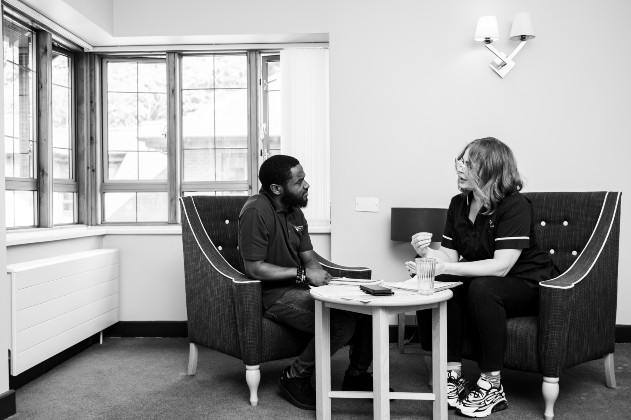
Nursing student Emily Dawe, who had the chance to talk to the NSWs, agrees.
"I’ve learned to let the patient lead the conversation,” she says. “Avoid asking too many questions but be aware of what they want to communicate with you. Speaking with kindness and ensuring they don’t feel rushed can make such a difference.”
The interviews also helped Obasusi Odunayo, who has just completed his nursing degree at Bournemouth University, to understand the importance of respecting a person’s culture to help them feel more comfortable.
“This gives them dignity and helps people feel valued,” he says. “Avoiding assumptions is so important and I will do all I can to meet my patient’s last wishes.”
Laura Adams says people often focus on our differences in a negative way, dismissing the “beauty of a multicultural society," and "failing to recognise that we all share a desire for human connection and kindness.”
“No one is the same. We’re all individuals, with different beliefs and experiences, but everyone deserves an equitable level of care,” she concludes.
We also recommend reading
- Take a look at the RCN Learn resource on promoting person-centred care at the end of life.
- Find out more about the RCN Pain and Palliative Care Forum.