

As a member of the Women’s Social and Political Union (WSPU), Florence McFarlane was arrested in 1910 for standing up for her principles, and marching to demand the vote for women.
Florence was a militant campaigner. She was also a nurse.
The WSPU didn’t do things by halves. Unlike their suffragist contemporaries, whose aim was to win women’s suffrage – the right to vote in an election – through considered debate and constitutional campaigning, suffragettes, from 1908, took a more unambiguous path.
Civil disobedience and direct action were the order of the day; a shocking approach for the time. Especially as the many middle-class women who were suffragettes were considered to come from “respectable” families. They played on these expectations, presenting themselves impeccably dressed, while developing seemingly outrageous plans to get their voices heard at the highest level.
Florence’s involvement in the WSPU campaign for women’s rights meant she was one of the nurses present when in November 1910, 300 suffragettes attempted to gain entry to the House of Commons. Their aim was to force the government of the day to listen to their arguments.
A broken promise
In his 1908 UK general election campaign, Herbert Henry Asquith pledged to include women’s right to vote in a new law he intended to pass if he was elected prime minister.
In November 1910, during a WSPU meeting, members learned that an early election would be called, which meant the new law would not be passed. He hadn’t kept his promise.
Initially they sent a delegation of 12 women, including medic, Dr Elizabeth Garrett Anderson, to enter Parliament. They were refused. So around 300 WSPU members marched to Parliament Square.
More than a century on, it can be difficult to imagine the hostile and violent response from police and members of the public. The events of 18 November 1910 became known as "Black Friday".
Suffragettes were physically attacked. Some were sexually assaulted.
The London Museum has published accounts of some of those present. It says one suffragette said:
"Several times constables and plain-clothes men who were in the crowds passed their arms round me from the back and clutched hold of my breasts in as public a manner as possible, and men in the crowd followed their example… My skirt was lifted up as high as possible… [the constable] threw me into the crowd and incited the men to treat me as they wished.”
Rosa May Bllinghurst, a protestor who used a wheelchair, describes being thrown to the ground, with her wheelchair being tampered with so she couldn’t use it.
Hundreds of women were seriously hurt.
Yet it was the protestors who were seen as the wrongdoers. Florence, then honorary secretary of the WSPU Dundee branch, was one of more than 100 women arrested, but all were released without charge the following day.
This was a watershed moment in the battle for women’s suffrage.
Steely determination
The WSPU called for a public inquiry into the violence but were refused. This, and the disgraceful way they were treated, didn’t put them off their mission, but they did change their tactics.
Denied both the right to vote and the right to justice, the WSPU’s strategy was increasingly to damage property. By March 1912 their window-smashing campaign, involving 150 WSPU members in London, led to 126 of them being put on trial.
All her life she had been something of a reformer
Florence was once again at the centre of the action. She was imprisoned for four months in 1912 for breaking a window during a protest.
It was during this incarceration that she became known as “Dundee’s hunger-striker” and was awarded the WSPU Hunger Strike Medal.
Her actions didn’t go unnoticed. A contemporary newspaper reported:
“All her life she had been something of a reformer. She was a nurse, and when she found nurses under-fed and under-staffed, she always made her protest.”
Prison care and justice for women
The National Archives show that more than 1,300 people, including 109 men, who supported women’s right to vote, were arrested for activism. Hundreds were sent to jail.
Many suffragettes who were arrested chose prison rather than pay fines, and were incarcerated in prisons around the UK.
Between 1906 and 1914, nearly 300 suffragettes were imprisoned at HMP Holloway, the women’s prison in north London, and many experienced brutal force feeding at the hands of its medical staff.
It was at this time the shocking conditions in the prison were thrown into the spotlight by the wider battle for women’s rights. Nurses were among those who joined the public outcry and highlighted there were no nursing staff onsite to help suffragettes recover after their ordeal.
In 1919, HMP Holloway became the first prison to employ trained nurses. Then the largest women’s prison in Europe, it held up to 950 female prisoners with a medical staff of just four doctors. All other care was carried out by “wardresses” who had little or no nursing training.
Nurses were introduced following a critical inquiry, which uncovered failings in Holloway’s care for women and babies, and the need for prison staff trained in midwifery.
By 1928, Holloway had the first prison nursing service, training nurses who could then work in other prisons across the country. However, prison nurses continued to work primarily in women’s prisons until the 1980s.
Florence’s link to the RCN
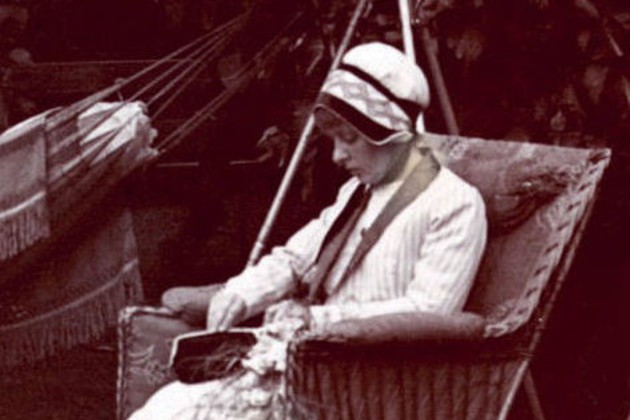
Florence didn’t seem to be destined to be a militant campaigner. She was born in Leith, Edinburgh in the late 1860s, to a middle-class family, who lived in a beautiful house in the Scottish capital. It’s unlikely that anyone would have thought she would become a well-known hunger striker who later in life campaigned for women's and children’s rights in New York.
Few could’ve predicted that Florence and her family would share a connection with today’s RCN. But we now believe that in her younger years Florence may have lived in the house that’s now RCN Scotland headquarters.
The RCN History of Nursing Forum has been involved in this work from the outset.
Professor Vari Drennan MBE, who chairs the forum, identified Florence as one of three Scottish nurse suffragettes who had been arrested. Then Dr Alison O'Donnell, former chair of the forum, found the link to RCN Scotland headquarters when she was researching Scottish nurses who were suffragettes.
Rather than dismiss a nurse involved in a militant protest, Florence resigned from her post as matron
“Census records show that a McFarlane family in the wirecloth industry lived at Glenbourne, the former name of our building, with 12 children – including a daughter named Florence,” Vari says.
“Her father, John McFarlane, was a wirecloth merchant and was known to be liberal in his thinking, so perhaps ‘allowed’ his daughter to train as a nurse.”
Alison also discovered that when Florence was working in a private hospital for women in Edinburgh in 1909, she was already demonstrating she was a woman of principle.
“Rather than dismiss a nurse involved in a militant protest, Florence resigned from her post as matron. She and the nurse later campaigned together in London," Alison explains.
- Read next: Molly Murphy: the life of an activist nurse
There’s a final twist too.
When Henry Asquith, the prime minister who went back on his pledge to the suffragettes back in 1910, sold his London house 10 years later, it was advertised as suitable for “a nobleman, embassy or family of distinction”.
But this grand old building was bought by the “Fairy Godmother of Nursing”, Annie Pearson, Viscountess Cowdray. She then gave it to the nursing profession.
If you ever visit RCN headquarters at 20 Cavendish Square in London, you'll be in the former home of a past prime minister whose lack of action helped spur on the suffragette movement. And take a trip to our Edinburgh office and you may be walking in the footsteps of one of the women who took a stand against his broken promise.
“It’s intriguing to think that the RCN’s Scotland headquarters, and all that it stands for in terms of equality and rights, is now established in what was likely to be the family home of a nurse who was so committed to campaigning for equality,” Alison concludes.
Further information
- Find out more about joining the RCN History of Nursing Forum.
- RCN Information Specialist Emma Taylor identified the address of Glenbourne from the census records before Dr Alison O'Donnell found the link to RCN Scotland headquarters.
- Professor Vari Drennan’s research found that Florence was one of four Scottish nurses who were arrested for their suffragette campaigning between 1906 and 1914. Her research has been published on the UK Association of History Nursing Bulletin website.
- Read more about the history of RCN headquarters.
- Watch our 'The fight for the vote: suffragettes and nursing' event recording.
- Read more about the 1912 WSPU’s window-smashing campaign on the Bow Street Museum of Crime and Justice website.
- Read more about Rosa May Bllinghurst on the Sisters of Frida website.