

News
A stunning set of spotlight displays at our Wales Library
Explore inspiring stories, rare objects and unique perspectives from nursing history at our Wales Library.
Connect with us:


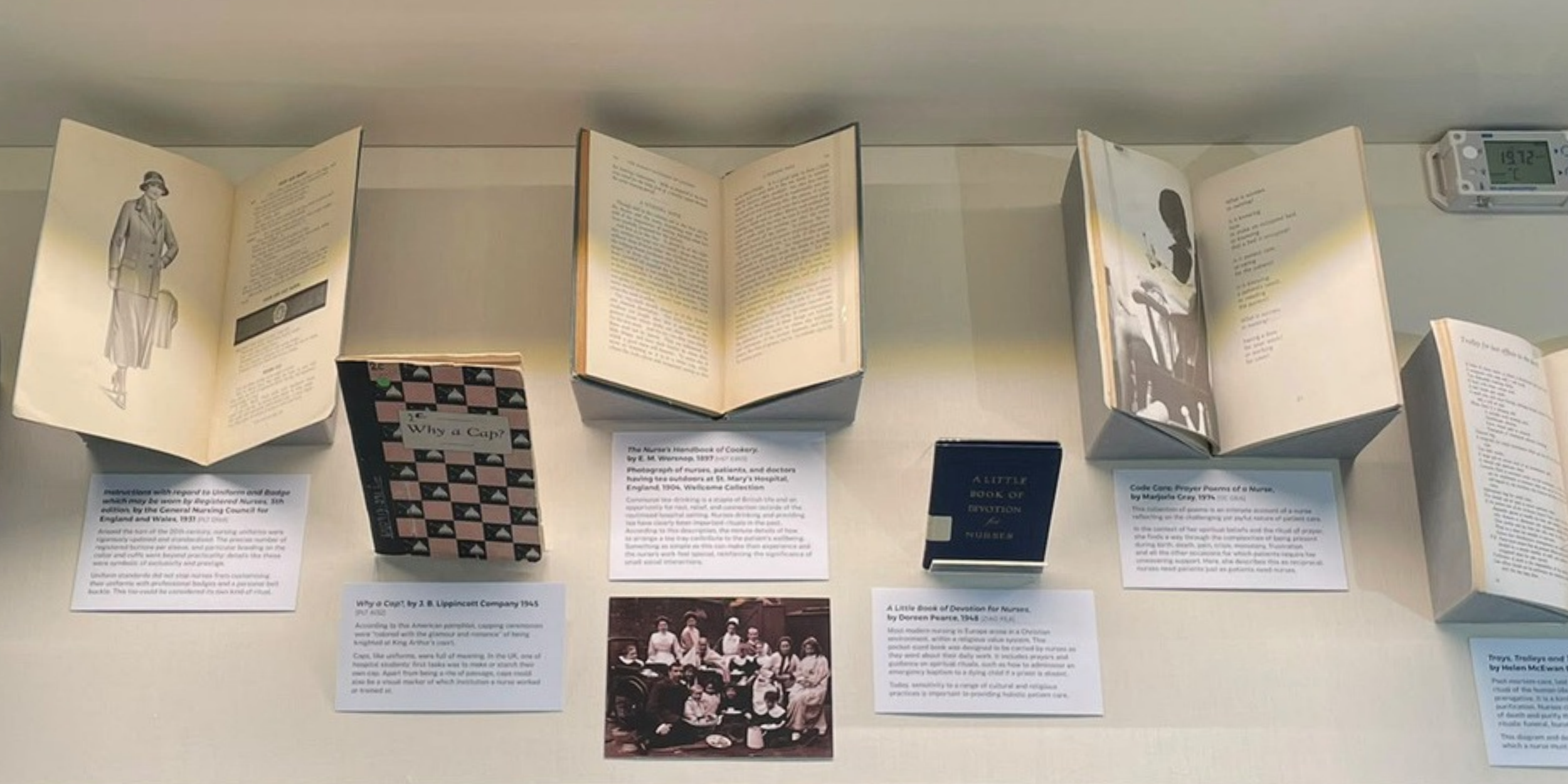
Kai and Dawn from the London Library and Museum team have been busy in Cardiff this week, carefully transferring the Graduate Trainees Spotlight displays into their new homes at Ty Maeth Library.
The displays explore a fascinating range of topics, from nursing pocket books, to nurses with experience of disability, to nursing and ritualism. Each offers an insight into different aspects of nursing history and celebrates the experiences and contributions of nursing staff.
All three spotlight displays look fantastic in their new exhibition cases and will be on display at Ty Maeth Library until the autumn of 2027. If you're in the area, do pop in and take a look!
Highlights from the displays:
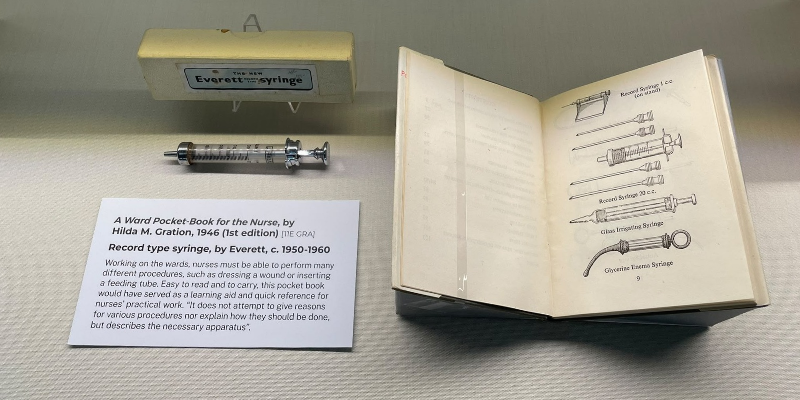
A Ward Pocket-Book for the Nurse, by Hilda M. Gration, 1946 (1st edition) [11E GRA]
Record type syringe, by Everett, c. 1950–1960
Working on the wards, nurses must be able to perform many different procedures, such as dressing a wound or inserting a feeding tube. Easy to read and to carry, this pocket book would have served as a learning aid and quick reference for nurses’ practical work. “It does not attempt to give reasons for various procedures nor explain how they should be done, but describes the necessary apparatus.”
(From It’s the little things: Nursing pocket books, curated by Stephanie Young)
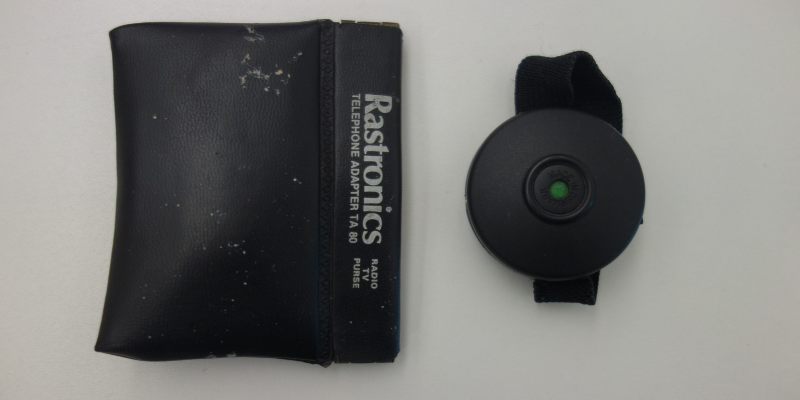
Telephone amplifying device belonging to Helen Cherry, c.1978
By the 1970s, grassroots campaigning by disabled people was reframing disability as a social issue rather than a medical problem affecting the individual. This helped to shift attitudes in some employers. In 1977, after a year of rejections from nursing schools, Helen Cherry was one of the first D/deaf people to begin training as a nurse. She used aids like this telephone amplifier to support her work, eventually going into district nursing and working overseas for some years.
(From Crossing the line: Nursing with experience of disability, curated by Ana-Sofia Velasco)
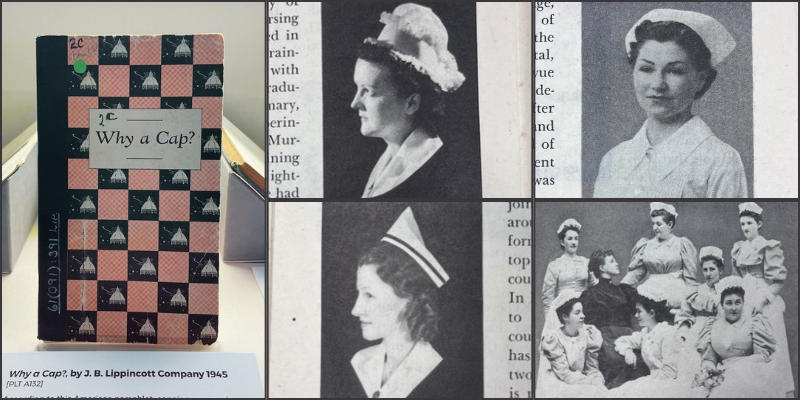
Why a Cap?, by J. B. Lippincott Company, 1945 [PLT A132]
According to this pamphlet, capping ceremonies were “colored with the glamour and romance” of being knighted at King Arthur’s court. Caps, like uniforms, were full of meaning. In the UK, one of hospital students’ first tasks was make or starch their own cap. Apart from being a rite of passage, caps could also be a visual marker of which institution a nurse worked or trained at.
(From Lying-in to Laying Out: Nursing and Ritualism, curated by Ianto Griffin)