


When the children from Kids Planet West End Nursery first arrive at the Bryn Marl Nursing Home in north Wales, they’re more than a little nervous. It doesn’t last long. In no time at all, the whole room is filled with the joyful sounds of play and laughter.
The children are there as part of a two-way intergenerational enhancement programme led by Kevin Jones, who’s been the home’s registered manager for just over five years.
Bringing children into a nursing home for older people with complex care needs, especially as many residents are receiving end-of-life and palliative care, might seem an unusual idea to some, but the project has been a huge success. The weekly visits have proved to be life-enhancing for children and residents.
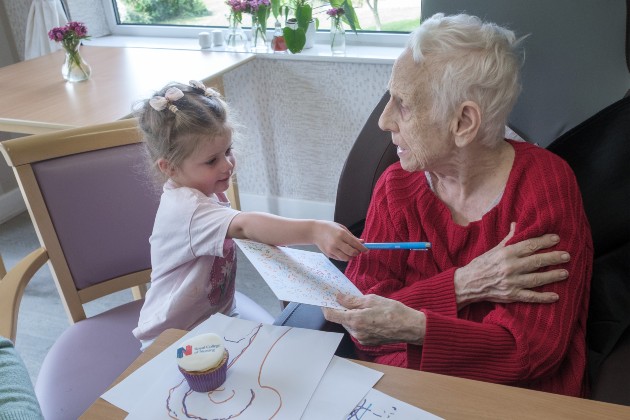
Kevin explains how he went about setting it up.
“We reached out to local nurseries in the area to see if they’d be interested in young people coming in to interact with the older residents,” he says. “We hoped that by building relationships, we could help break down the stigma of children socialising with older people, while our older residents could see first-hand the importance of their role in society.”
Nursery staff report that the children, who were previously anxious about visiting the nursing home, are no longer worried about interacting with older people. They know when they’ll be going to the home as nursery staff chat about it beforehand. They now look forward to their visits.
By building relationships, we could help break down the stigma of children socialising with older people
Residents, in turn, can see the impact of sharing their experiences and wisdom with younger people. In a society where all too often an older person can feel invisible, demonstrating their importance in a practical way has a significant impact on their wellbeing. Added to that comes the incidental joy of being around young people who are naturally inquisitive and full of playfulness.
Getting to know you
For the children, the introductions are gentle. They first go into the dining room where nursing staff ask their names.
“We’ll say: ‘We’re really looking forward to hearing a song, so who’s going to sing today?’ And we’re met with a chorus of ‘mes’. They love it – and all try to be the best singer," Kevin says.
During their visits, the children do what they’d otherwise be doing in their nursery setting. They sing, they dance, and they bring their nursery projects to look at and complete with the residents. This might be looking at the different seasons of the year or simply doing arts and crafts.
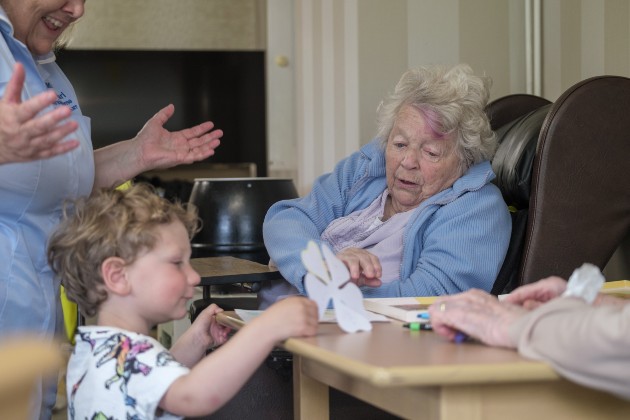
For Kevin, the impact of the visit on residents provides strong motivation to continue the project.
“When the children are here, they’re all full of smiles and keen to chat. Afterwards, you can see how happy they are. They always remember the days the children are coming in and look forward to it.”
Residents who are unable to get out of bed aren’t left out either. Nursery staff take the children to them instead.
“Some of these residents are living with advanced dementia but when the children start singing, you can see their faces light up with smiles,” Kevin says.
To ensure the safety of everyone is protected, nursery staff, who all have enhanced DBS certificates, stay with them throughout their time at the home.
The home activity coordinator works collaboratively with nursery staff to organise the sessions. The nursery emails Kevin once a week to see what session they’ll be doing, and he makes sure there’s juice, biscuits or fruit available for the children.
“There are very limited resources in health and social care for meaningful activities, but this doesn’t have to cost anything, or costs very little,” Kevin says. “We look forward to celebrating events with the children, too. We bought Easter eggs again this year and at Christmas and Halloween they dress up. It’s fantastic to see these interactions.”
Forming bonds through an 80-year age gap
Kevin’s programme is focused on visits to the home by children aged between around two and five, but they were recently contacted by a 16-year-old doing his Welsh Baccalaureate qualification at a local college.
As part of his studies, he was seeking 15 hours of voluntary work connected to United Nations' health and wellbeing goals.
After he was given a mentor, he spent time with residents, talking about a range of issues including football, politics and current affairs. He said that initially he didn’t understand what the residents were talking about. That quickly changed.
They were the ones giving back
Kevin remembers: “He developed a special bond with a resident who’s 96 years old. They were both football fans - the older man used to be chairman of Wrexham football club in the 1970s. Soon the younger visitor was hearing all about the history of the club and the players from his time there, way before the Ryan Reynolds era. They were both fascinated.
“Two of the residents said they felt they'd educated this young man on the world, and were over the moon that he had learnt something. They were the ones giving back.”
Intergenerational support
The home also supports the nursery in practical ways, donating kitchen items for outdoor learning areas.
“We hope this will help the children to extend their imaginative play and learning outdoors so they can thrive, explore, and develop,” Kevin says.
“It didn’t cost much, but the children really benefit from it. It was partly a thank you for the benefits the programme has brought us but also an extension of the collaborative working we do.”
In the meantime, children who aren’t used to being around people as old as the residents learn first-hand what our older people can give, still give and what they've given over the years.
“Many of their grandparents may only be in their 40s or 50s, but the residents here have often made significant sacrifices when they were younger.
"There was no internet or even automatic washing machines when they were growing up. Some here in north Wales worked in the quarries – and that was hard, physical work,” Kevin says.
“This is a great way for young children to get an insight into the lives of older people when they were younger. As they grow up, I hope they’ll remember coming here and if they're walking down the street and see an older person struggling, they might help them.”
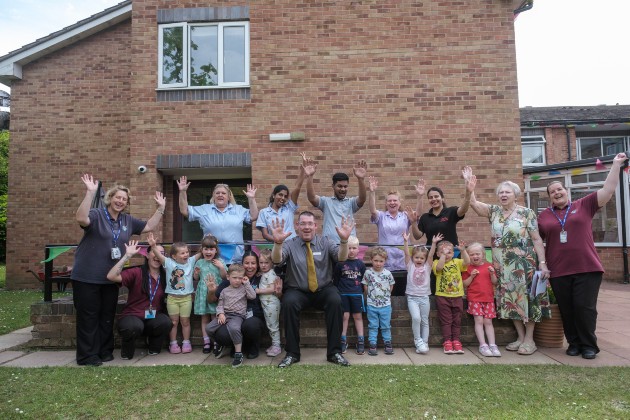
The nursery has donated prizes for raffles and tombolas for the summer fete held at the nursing home. The children’s families were invited and were keen to see where their children spend their time.
“It was lovely to see the children come here with their parents,” says Kevin. “They spent the afternoon here, enjoying ice cream, hot dogs, burgers and the brass band. We hope they will come back next year, too.”
Laughing and singing has transformed the environment
It’s a two-way relationship endorsed by the nursery. They say they’re delighted to have built such a strong bond with the home and that the children and staff thoroughly enjoy their weekly visits. Parents are positive about the social interactions too.
A future to look forward to
Kevin and his team are continually evaluating the programme, which runs alongside other therapeutic activities in the home.
“It’s constantly evolving,” he says. “We’re going to carry on working closely with the nursery, exploring ideas, trying to improve the experience for the children, home staff and the residents."
Kevin delights in the positivity and brightness the programme brings to residents, children, staff and visiting professionals.
“Everyone comments on how lovely it is to see young people in the home and how laughing and singing has transformed the environment.
“The programme has brought the home and its residents a whole new lease of life,” he concludes.
Further information
- Find out more about the RCN Older People's Forum.
- Read about RCN work in independent health and social care.


