


In some of the quietest rooms in the Holy Rosary Care Home, people’s lives are changing. Those who have chosen to live their lives in the confines of their own four walls, are starting to move.
They’re starting to smile again too. Their physical and mental strength is being built back up by a nursing support worker who simply refuses to let them give up.
“I thought coming here meant life was over, but Don helped me see I still have a lot of living left to do,” one resident said.
That’s the impact that Don Meegoda has made.
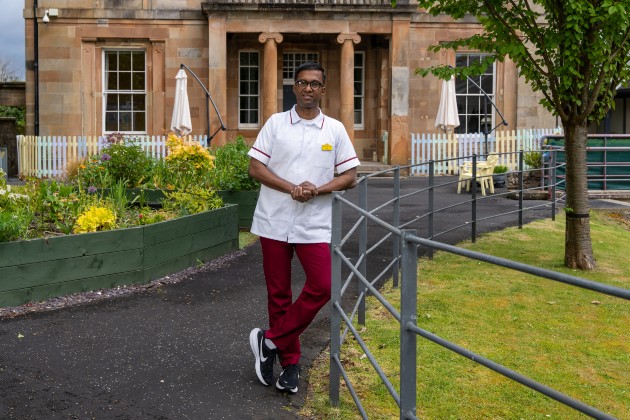
Focusing on the individual
Through his leadership of the Strength and Balance Project, Don helps residents regain mobility, confidence and independence – showing that later life can be active, purposeful and full of joy.
Don came to the UK in 2023, very quickly embarking on a career in health care. Now, having worked in the home for a few years, he’s enhancing mobility, reducing the risk of falls and promoting wellbeing for the most vulnerable residents.
Activity coordinators were already helping those who were able and willing to leave their rooms, but Don’s 10-step programme is aimed squarely at those who can’t. He ensures people feel safe and cared for, and by focusing on the individual, he builds long-lasting relationships and trust.
This requires patience. It isn’t something Don is willing to rush. He gradually builds residents’ confidence, joining in himself and helping those previously isolated in their rooms understand the advantages his programme can bring.
I find out about the person, not just the resident
“The build-up is slow and no-one is forced to do anything,” he says. “My focus is always on the individual in front of me. I find out about them as a person, not just a resident.
"I love asking them about their younger selves – their school days and if they have ever done any sport. Some have told me they used to cycle and others played badminton. I know these residents understand the benefits of exercise already.”
For Don, it’s about what people can do, not what they can’t.
“Having a positive attitude is so important,” he says. “I remember my cricket coach in Sri Lanka encouraging me when I was younger. ‘If you can’t run this far, run a different length,’ he’d say. It’s the same here, it’s about building a can-do attitude into the programme.”
What the programme includes
Each session begins with a check-in, allowing activities to be tailored to residents’ abilities and energy levels.
“We start with breathing exercises before moving on to stretching arms, fingers and legs. Then we circle arms and ankles. I ask them to count – I start 1, 2, 3 – and they follow.
“As each week goes by, I point out what they can do this week compared to the last week and can see their smiles when they see how they’ve progressed.”
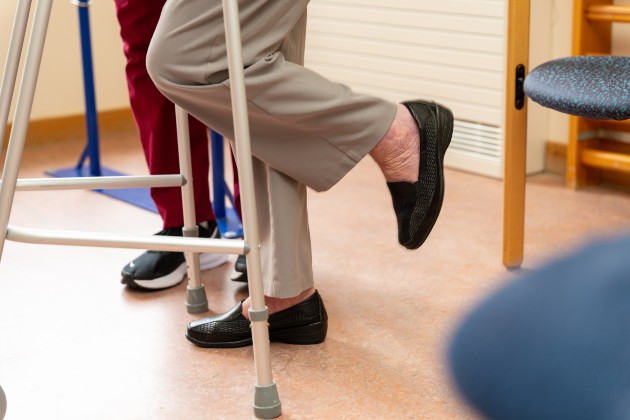
The programme includes a range of exercises such as heel raises, knee bends and exercises for the whole body. Residents move forward gradually until they’re doing 10, and then 20 repetitions.
“Residents feel the physical and mental benefits afterwards,” Don explains. “Their mood changes, they sleep better, have more energy and an improved appetite.
“It’s a social occasion too. A lot of the residents I work with don’t ever leave their rooms so it’s not just about the exercise. It’s about having a drink and a chat together. Sometimes we even have a little cake.”
Mindful meditation
Don’s recently started building meditation into the programme.
“As a Buddhist, I practise meditation every evening before going to bed. It helps me sleep and I wake refreshed the next morning.
It’s about concentrating on the here and now
“I use the same technique for walking meditation. I ask residents to keep concentrating on their pathway. Take one step at a time – right – then left – then right and so on. The focus helps them to avoid distractions and obstacles.
“It’s about concentrating on the here and now, and not worrying about the past or future. This mindful approach has helped me in one of my objectives which is to reduce the number of falls residents have.”
Sharing learning
Don initially embarked on the programme with the support of Pooja Gupta and Stuart Wilson from the Care Home Collaborative, but the project’s success has been built on team collaboration. He now works closely with colleagues including the deputy manager Cristina Minda and the whole nursing team to embed the sessions into daily routines.
Families are involved too, with some coming to observe sessions. The feedback has been consistently positive; there’s delight at the impact he’s had on muchloved parents and grandparents.
With a keen eye for statistics, Don monitors not just family and resident feedback, but also uses weekly observation logs, while tracking measurable changes such as improved sit-to-stand times and balance.
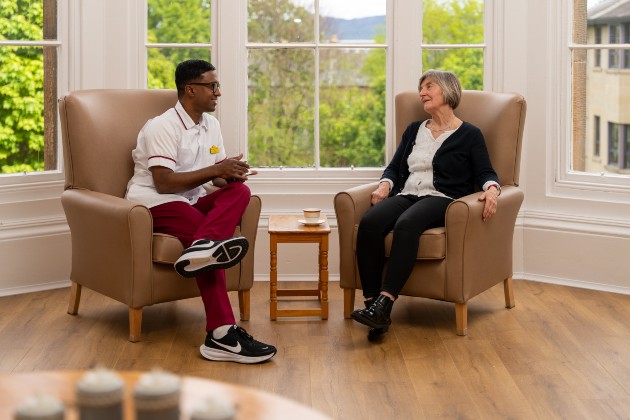
“I haven’t actually been working in health care for that long,” Don says. “When I lived in Sri Lanka, I was a sales manager and while I never expected there to be transferable skills from that field, I have experience of having to demonstrate how the figures add up. I now apply the same theory and do an analysis each month and a review every six months.”
The data has shown the clear benefits of the programme and has secured management support for it to continue. Residents who once struggled with mobility, confidence or motivation now show significant improvements in strength, balance and wellbeing. Several residents with reduced mobility are now moving more independently within the home.
Falls have reduced, participation in daily activities has increased, and families report their loved ones "are happier and more confident, and talk about the future again.” One resident said Don is “the reason I get up in the morning.”
Don is now looking at sharing his knowledge wider and has plans in place to present what’s been learnt at local improvement meetings.
But while his evidence is crucial to demonstrating the benefits of the programme, Don’s priority is always the people he works with.
“These are people who need our help at the latter end of their lives, and I want to do everything I can to support them,” he concludes.
Further information
- Find out about the RCN Older People's Forum.
- Read the RCN Magazine article Let's motivate.


