
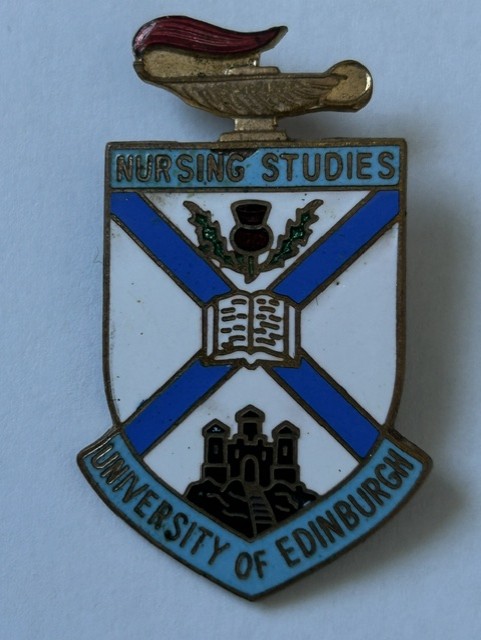
Nursing Studies at The University of Edinburgh is celebrating its 70th anniversary. It was in 1956 that a unit for nursing education and research was established. The first in the UK.
The RCN’s Nurse Tutor course transferred into the unit as the starting point for its teaching and in 1960 an undergraduate course was launched: the first in the UK to integrate preparation for registration with a university degree.
More ‘firsts’ followed. In 1971 Nursing Studies welcomed the UK’s first Nursing Research Unit with Lisbeth Hockey as its first Director. In 1972 Margaret Scott Wright was appointed to a newly-created Chair of Nursing Studies: the first professorship for British nursing.
Please don’t think I am simply bragging about my alma mater! Other universities played a part in the early years of nursing’s move into the university system. But dating these ‘firsts’ provides a timeline of the early history. Fast forward to 2009 when the government announced that by 2013 all UK-educated nurses joining the register must possess a university degree.
Interestingly, that was not an aspiration at the outset. The 1972 Briggs Report envisaged that graduates in the profession would not rise beyond 5%. The number of universities offering nursing degrees did increase steadily, but slowly. With Project 2000 a higher education qualification became attached to registration, but a Diploma not a degree. It was with the UK-wide merger of polytechnics and universities that all nursing education moved into the university system.
Alongside this transition in nursing education, the move into universities also provided a base for research and research training. From slow beginnings and small projects, we now have many large-scale programmes of high-quality innovative research and strong research partnerships with practice colleagues, other disciplines and international research groups.
To achieve the standing of an all-graduate, research-based profession has been hard work and hard won. So, it is important that we celebrate the 70th anniversary of the beginning of that journey but, alas, marred by worry about the future because the university system is in the grip of a crisis.
The slowly-building financial crisis in the universities has come to a head. Tuition fees, although crippling for students, no longer cover teaching costs; international student numbers are falling; research is more expensive. Some universities are taking drastic action to avoid insolvency by closing down courses and shedding staff. Nursing already has been hit for example, Cardiff University, with nursing degrees since 1972 and the RCN Chair of Nursing Research since 1988, announced last year that Nursing was earmarked for closure. Although that threat has been lifted some nursing courses are being withdrawn or reduced, and course cuts and staff losses are happening in other university nursing schools.
It’s not only about the impact of this university crisis on nurse education and, therefore, on the nursing workforce. It’s also about the potential loss of research capacity and research leadership and, in turn, the impact of that on the ongoing pursuit of knowledge-building to underpin nursing practice and policy.
So, yes, we all should celebrate this 70th anniversary of nursing’s move into the university system, but we also must front up to the jeopardy of the current crisis. We will need to fight to secure a safe future for nursing education, research and scholarship.
Alison J Tierney CBE FRCN
Fellows of the Royal College of Nursing
Formerly Director of the Nursing Research Unit; Professor of Nursing Research and Head of Nursing Studies at The University of Edinburgh; Professor and Head of Clinical Nursing at The University of Adelaide, South Australia

 Share on Facebook
 Share on LinkedIn


