
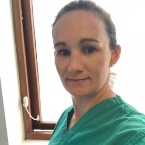
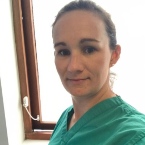
If you had told me a few years ago that I would be travelling to Uganda to work alongside nurses, midwives and doctors on a maternal healthcare project, I'm not sure I would have believed you. Global health was something I associated with people who had very different careers from mine. I knew opportunities existed, but I had never considered that they might be available to me. I was a nurse, then a midwife, working in the NHS. I didn't know where to start or how I could contribute.
Today, I work as the Lead Midwife for Maternal Medicine at Cambridge University Hospitals. My role focuses on improving care for women with complex medical conditions during pregnancy and after birth. Much of my work involves developing services, strengthening referral pathways and improving how we recognise and respond to maternal deterioration. These are challenges we face across the NHS, but I hadn't appreciated how transferable those skills could be elsewhere.
Through Cambridge Global Health Partnerships (CGHP), I discovered an opportunity to become involved in global health. CGHP brings healthcare professionals together in long-term partnerships, sharing knowledge and experience to strengthen healthcare systems. What appealed to me was that this wasn't about travelling somewhere to deliver a few teaching sessions and then leaving. It was about building relationships, working together and creating something sustainable.
In September, I travelled to Mbarara in southwestern Uganda, working alongside colleagues from Mbarara University of Science and Technology (MUST). Our team visited the regional referral hospital and five surrounding health centres. We spent time with nurses, midwives, doctors and other healthcare professionals, understanding how maternity services operate and the challenges they face. We observed clinical practice, discussed emergency referrals and delivered teaching, including some impromptu cardiotocography (CTG) training.
What struck me most was the expertise and resourcefulness of the colleagues we met. Midwives were delivering care in busy environments, sometimes with limited equipment. Some lived on site, balancing their professional responsibilities with family life, occasionally with their babies alongside them. Yet their commitment to the women and families they cared for was unmistakable. I quickly realised that I had as much to learn as I had to offer. Global health is not about arriving with all the answers. It is about listening, understanding and recognising the knowledge that already exists.
Our visit was part of a two-year collaborative project to strengthen emergency obstetric care and referral pathways across the Mbarara region. Together with our Ugandan partners, we are working to understand current practice, identify barriers and develop practical guidance that reflects the local healthcare setting. It feels remarkably familiar to my work in England. Whether in Cambridge or Mbarara, ensuring that a woman receives timely specialist care requires communication, teamwork and effective referral systems. The circumstances may be different, but many of the principles are the same.
What I hadn't anticipated was how much this experience would make me reflect on my own practice. We often talk about the pressures facing NHS maternity services, including workforce challenges, delays in recognising deterioration and failures in communication. Seeing how colleagues navigate similar challenges in a different healthcare system made me question some of our assumptions about how care should be delivered. It also reinforced the importance of relationships, clinical judgement and nursing and midwifery leadership.
Perhaps the biggest lesson for me has been that you don't need a career specifically in global health to contribute to it. Nurses and midwives already possess valuable skills in clinical care, education, leadership, quality improvement and service development. Those skills can make a meaningful contribution to international partnerships. Equally, working alongside colleagues in another healthcare system can bring enormous benefits back to our own patients and services.
My involvement won't end with this visit. I will continue supporting our Ugandan colleagues remotely as the project progresses. I returned home feeling inspired, grateful and with a renewed appreciation for the profession I am part of.
For any nurse or midwife who has ever thought global health sounds interesting but assumed it wasn't something they could do, I would encourage you to explore the opportunities available. You don't need all the answers or to be an expert in another country's healthcare system. You need curiosity, an openness to learning and a willingness to share your skills.
I never imagined that my nursing and midwifery career would take me to Uganda. Now I can't imagine not being involved.

 Share on Facebook
 Share on LinkedIn


