
There’s something uniquely grounding about the changing landscape when travelling through Wales and my early morning drive provided a moment to gather my thoughts ahead of a busy few days. My time in the north was centred on social care, nursing and hospice care, with an opportunity to meet primary care staff at the North Wales RCN Representatives Conference, an annual event organised by North Wales RCN reps, this year focusing on primary care, ending with time to spend with two of quality development nurses (who are also Queen’s Nurses) from Betsi Cadwalader University Health Board (BCUHB).
Primary Care Nursing Conference: Shared challenges, shared ambition
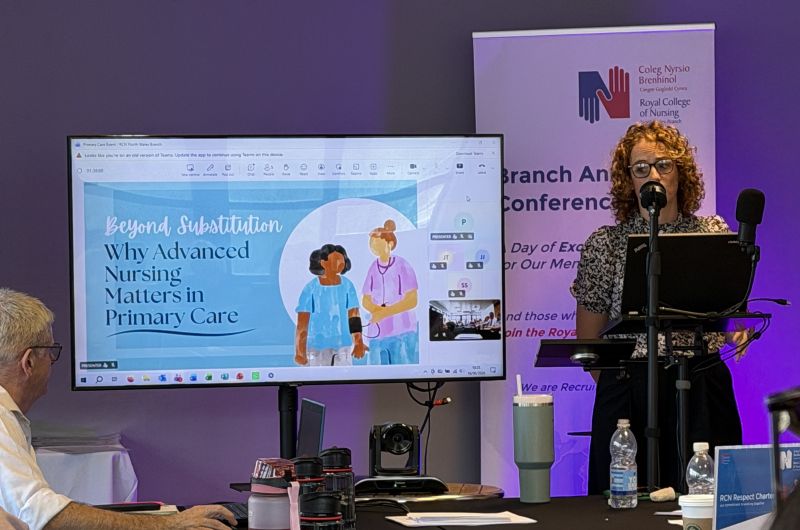
The conference brought together an inspiring mix of primary care nurses, leaders, and practitioners, such as Frances Baverstock, a General Practice Nurse with vast experience; Nia Boughton, one of the few consultant nurses in Wales, and who’s role is in primary care at BCUHB; Thea Brain, Policy Advisor at Care Forum Wales, a non-profit organisation sharing best practices and resources, influencing policy makers, and keeping members up to date with legislation; and Meghan White, Clinical Specialist Occupational Therapist and Bevan Exemplar at BCUHB. These people are all united by a shared commitment to strengthening community-based care.
Conversations quickly moved beyond policy and into lived reality – workforce pressures, increasing complexity and the essential role of nursing and multidisciplinary approaches to keeping people well in their homes. What stood out most was the drive for integration and prevention – with primary care nurses, nurses in social, nursing and domiciliary environments, playing pivotal roles central to managing those with long-term conditions, multiple co-morbidities, reducing hospital admissions, supporting population health and driven to ensure good quality lives for those they care for.
The conference reinforced a key message: the nursing workforce in primary care, social, nursing and domiciliary environments are not just adapting to change – they’re leading it.
Visiting a hospice: compassion in practice
We took the opportunity to visit a local hospice with an embedded mission to support those with life limiting disease, which provided a powerful insight into truly holistic care. Beyond symptom management, teams demonstrated how emotional, social and family support are embedded into everyday practice with a strong emphasis on supporting people to remain at home where possible, early engagement with palliative care services, and partnership working with primary care and community teams.
It highlighted the importance of integrating hospice expertise more fully into wider community pathways. The environment was warm, inviting and gently happy with an air of contentment, and a commitment to continuous improvement, with the care team wholeheartedly welcoming the opportunity to join our ‘Library in a Box’ scheme.
Four care homes, one shared commitment to improve care
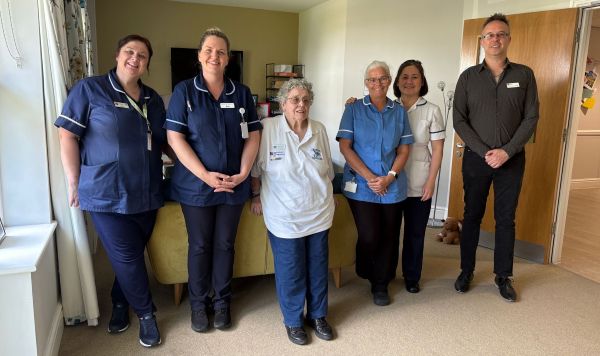
Across four care home visits, a consistent narrative emerged – commitment, resilience and an ongoing drive to improve care despite increasing pressures. The strength of relationships, both between staff and residents and with families, really stood out.
One care home manager shared a story with me that demonstrates the differences between support for staff in the independent health and social care (IHSC) sector and the NHS. They’ve taken it upon themselves to personally fund the clinical lead nurse to undertake their prescribing course with the local university. With the support of the two visiting GPs acting as supervisor and assessor, this registered nurse is already making a difference on the ground, explaining that their awareness now of antimicrobial stewardship has already resulted in a reduction in the use of antibiotics in the home with no increase in hospital admissions. This is a clear positive impact on individuals and public health – so why is the IHSC sector having to self-fund? Let’s pause and reflect on the belief that prescribing and cannulation skills are the answer to keeping people at home and visit antimicrobial stewardship and the power of education!
Key learning for my role
My visit highlighted the need for stronger integration between health and social care services, greater investment in and recognition of the care workforce, and new approaches to meet the increasing complexity of residents' needs.
Conversations with providers reinforced the value of partnership working and multidisciplinary care, particularly in improving resident experiences and reducing unnecessary hospital admissions. It was inspiring to see the passion and commitment of teams working together to deliver high-quality care.
Perhaps most importantly, direct engagement with providers showed that lived experience must help shape policy and service development. As the focus shifts towards prevention and proactive care, social care leaders need to be involved from the very beginning, not simply consulted after decisions have been made.
Reflections on the road home
This trip was not just about attending a conference or completing visits – it was about listening, observing and understanding the realities of care across Wales. It reinforced the importance of bridging the gap between strategy and delivery, supporting the IHSC sector as a core part of the system, and continuing to build relationships across organisational boundaries.
As the future of primary and community care is reshaped, these experiences matter. They ground our work in reality and remind us that behind every framework, policy and guideline are people – residents, patients, families, carers, friends, support staff and professionals that truly care, striving to deliver the best care possible.
 Share on Facebook
 Share on LinkedIn


