
In 1896, the journal The Nursing Record published a series of heated articles on the ‘hours of hospital nurses’. From Britain to America, Australia to New Zealand, nurses reacted to the international labour movement’s call for an 8-hour work day. Writing from the British perspective, one commentator argued that implementing 8-hour shifts would result in ‘shiftless nursing’ – producing a lack of continuity of patient care. Instead, a good nurse should simply stay ‘on shift’ as long as was necessary for the patient – even multiple days and nights. Anything less would result in ‘nursing made easy’.
Since the professionalisation of nursing in the late 1800s, how to deliver nursing overnight has been a point of serious contention. Florence Nightingale, for example, strongly believed that nighttime care needed to be delivered by attentive, trained nurses. And yet looking after the wards overnight required that nurses be able to put aside their own need for rest. Since that time, the way that care has been delivered overnight in hospital has changed considerably. And yet the way we talk about night shifts today is profoundly informed by attitudes and practices from the past.
In a new project funded by the Wellcome Trust, my team and I will collaborate with the Royal College of Nursing to write a new history of night work in the hospital, from 1850 to the present day. The aim of the project is to unpick how the delivery of nighttime care has been experienced by healthcare professionals like nurses – and to better understand how night shifts have been organized, managed and navigated over the last almost 200 years. The project will develop a new, public exhibition at the RCN on nursing at night – and create opportunities for College members to join in the discussion about how night shifts might be improved for staff wellbeing.
Something I think history can add to current discussions around night shift working is a better sense of how professional narratives and attitudes have evolved over time. When nursing was being professionalized in the 19th century we didn’t know very much about the physiology of sleep or circadian rhythms. The idea that someone could simply ‘skip’ sleep made sense in 1890 in a way that it just doesn’t today. Technology has also changed massively – the bright, noisy modern hospital at night is worlds away from the Victorian hospital ward. History can bring a more complex perspective the way that ideas around what is ‘good’ or even ‘normal’ nighttime work have evolved. Perhaps we might even ask if these ideas are still serving nurses today?
The Night Shift project is hosted by Newcastle University and launches in January 2027. Stay tuned for more announcements about the RCN exhibition and how to get involved.
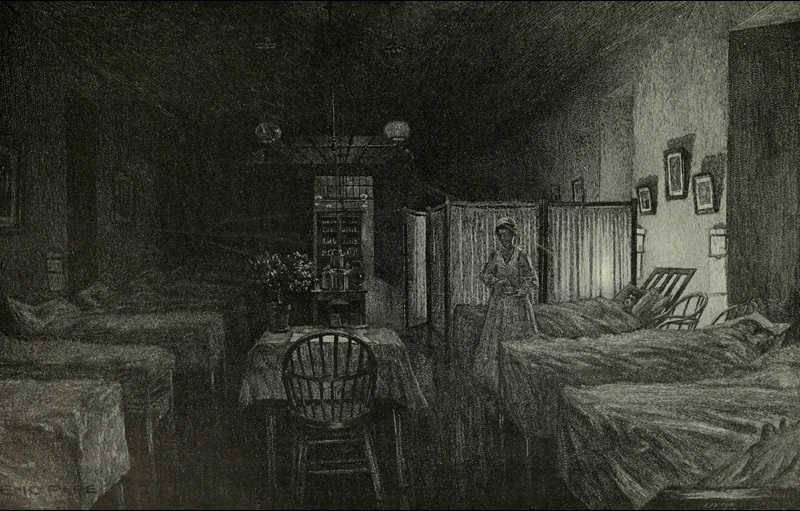
'Night in the Women's Ward' from Scribner's Magazine (1887), Wikimedia Commons

 Share on Facebook
 Share on LinkedIn


