
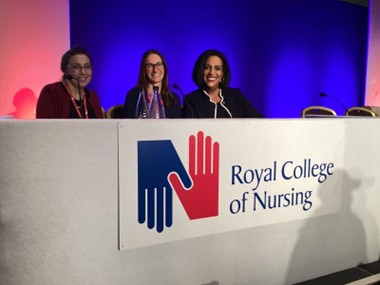
 Our RCN Joint Reps Conference took place in Leeds this October, during Black History Month. As part of that celebration, Senior Nurse Michelle Cox delivered a powerful presentation to reps on her landmark racial discrimination case. As a nationally recognised expert in Equity, Diversity, and Inclusion (EDI) and a passionate advocate for anti-racist practice - her insights resonate far beyond the month of October, and I want to share some of these with you.
Black History Month (BHM) is an opportunity to recognise and celebrate the achievements, contributions, and history of Black people, while promoting broader awareness of racial justice and social equality. However, there is a tendency for BHM to be marked by organisations in only a very shallow way. When this happens, it can become tokenistic - limited to symbolic gestures like adding a single speaker or event in October without embedding meaningful, year-round action or system-level change. True engagement requires moving beyond superficial acts to sustained learning and dedicated action.
This year’s Black History Month theme, “Standing Firm in Pride and Power,” is particularly relevant to all people committed to social justice.
Michelle’s story is not only Black history—it is also nursing history, trade union history, legal history and women’s history.
Two years ago, with legal representation from the RCN, Michelle won a race discrimination case against the NHS. The ruling found that her line manager had excluded Michelle at “every opportunity”, which created an “intimidating, hostile and humiliating environment” for her to work in. The session began with a powerful introduction from Ferguson Doyle, RCN’s Senior Legal Advisor, who noted that Cox v NHSE was one of the most important cases of his career.
Michelle began her talk by recounting her experience of attempting to speak up as a senior leader in a highly feminised profession, but as she continued, we came to see that her experience also involved troubling attitudes around health and disability. These various perceptual, social and cultural phenomena all intertwined with race to make for a complex and challenging case. In other words, racial discrimination did not operate in isolation; it combined with other aspects of her identity to create a series of complex workplace challenges. It is only by taking the time to tease out and comprehend the role of these intersecting factors that can we fully understand what happened in Michelle’s case and prevent similar injustices.
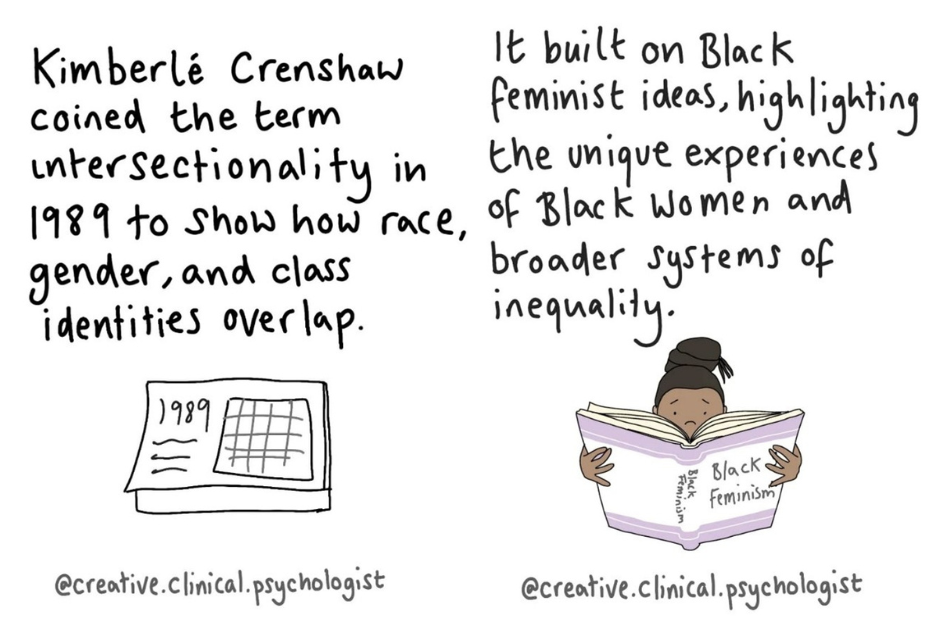
A key Black feminist concept that comes to mind when thinking about Michelle’s case is intersectionality. This means the way overlapping identities shape experiences of discrimination – as explained beautifully in the illustrations below.
Michelle’s case reminds us that discrimination is rarely one-dimensional. Tackling it demands vigilance, thorough record-keeping, and a commitment to equity that extends beyond commemorative months and performativity. “Standing firm in pride and power” means acting decisively, challenging barriers to justice, and ensuring every member receives fair representation.
Further information:
You can read more about Michelle’s case here
For further self-directed learning for RCN learning reps, safety reps and stewards on equality, diversity and inclusion issues, please see our https://www.rcn.org.uk/reps-hub/.

 Share on Facebook
 Share on LinkedIn


