
‘Our mother always talked about having a second chance at life’ – explain Guy and Samantha, the son and daughter of Valerie Tavrogis (Travis), whose life was saved by pioneering medical and nursing care as a newborn.
Upon her death, Guy and Samantha reached out to RCN Wales with the hopes of making a donation in their mother’s memory and to recognise the profound impact that nursing and medical staff have on the lives of others.
It was decided that the Alun Islwyn Giles Nursing Scholarship, which promotes both the science and art of nursing, was the perfect way to honour what is a truly incredible story. One which begins with the brave action of one doctor and nurse in particular.
20 minutes old
On 17 January 1935 at Cardiff Royal Infirmary, nurse Edith Harries received a phone call from the surgical department, announcing that a baby not yet half an hour old would need to be transferred to her ward after undergoing emergency abdominal surgery. The baby was born with abdominal organs outside the body in a translucent sac (known as complete exomphalos). That baby was Valerie Travis.
Upon seeing Valerie for the first time following the surgery, Edith’s first question was: ‘has she been christened?’ Previously, cases like this were only of pathological interest, and Edith did not expect Valerie to survive long. She soon found out that the family were Jewish and, unsure of the religious arrangements required, called as many of her contacts in the Jewish community as she could.
Immediately, Edith displayed compassion during a deeply uncertain time for a new family, exhibiting the values of holistic care.
A radical cure
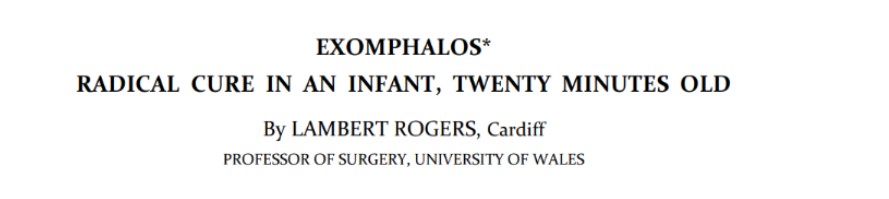
(Image: Title of Professor Lambert Rogers' report on Valerie's life-saving surgery)
The Doctor who performed the surgery was Professor Lambert Rogers. In a write up of the operation for a surgical journal, he vividly describes the swift action needed to save Valerie: “an attempt was made to replace the viscera prior to repairing the gap in the abdominal wall. The liver was first put back, but it was then found that it was not possible to replace the intestines, so these had first to be introduced and the liver afterwards.”
What followed was long and watchful night.
Upon returning to the ward the following morning, Edith was met with the news that Valerie had made it through the night - she had survived what was at the time, a miracle procedure.
This was down to the skill and decisive action of Professor Lambert Rogers and the care of Nurse Edith, which Guy reflects: “showed other doctors and nurses what could be done. And who knows how many children have been saved (as a result)?”
After ten days in hospital, Valerie was finally reunited with her mother and was taken home shortly after.
Lost and found
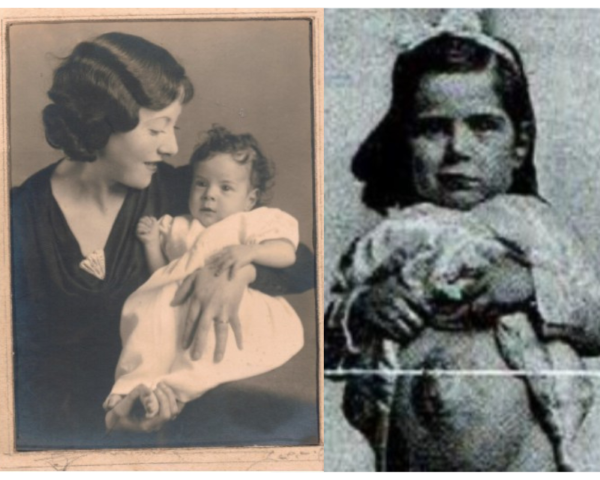
(Image: Left: Valerie with her mother, Leah. Right: Valerie age 4)
Nurse Edith and Professor Rogers continued to see Valerie for regular check-ups until the family moved to New Zealand three years later. Edith kept in touch by post but, at the start of the war, their letters became lost in transit.
Fate intervened when Professor Rogers was posted to the Pacific Command. He had the chance to visit Wellington, New Zealand and arranged with a colleague he knew there to reconnect with the Travises.
Upon his return, he told Edith all about how Valerie was growing from strength to strength and forwarded their new address. When Valerie was old enough, she began writing to Edith herself about her schooling, hobbies, and life in New Zealand. At 21 years of age, she announced her happy engagement to her partner Gerald Bermel and, following the wedding, visited the UK.
A lifelong confidant
Edith remained a constant during the milestones of Valerie’s life, providing a listening ear to the highs and lows. Valerie complained of no other health issues until the lead up to her wedding day, where she needed an operation for supposed appendicitis. However, after the surgery it was found that a number of her internal organs, including her uterus, were not in the right place – As such, she was told it would be unlikely that she could have a family.
She confided in Edith about the diagnosis, and upon conferring with Professor Rogers, they sent a reassuring letter back urging Valerie not to rule out the possibility entirely.
Defying the odds
“What’s so strange about that? Just an announcement of a birth in a newspaper, thousands happen every day! But there is something outstanding about this event", reflects Edith in her written account of events.
Following a reunion visit to the UK, Valerie wrote from New Zealand to announce that she was expecting a baby. She later sent a letter from the maternity ward announcing a healthy baby born on 5 August 1964 – Guy Bermel.
If there was a sign that this was meant to be, it came on the day Guy was born - The 5th of August, which also happened to be Edith’s own birthday.
Guy was given the middle name ‘Lambert' in memory of Professor Rogers, who sadly died before Guy's birth. Valerie’s second child Samantha Bermel was born in November 1966.
A lasting legacy
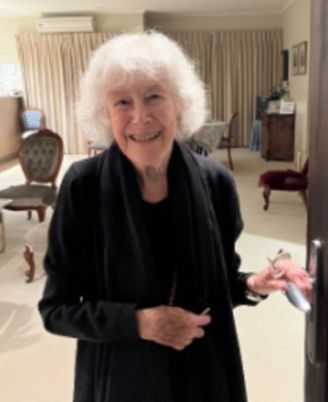
(Image: Valerie in her later years)
Valerie continued to live a determined and full life; moving to Sydney for some time after the death of her husband Gerry and travelling between Australia and the United States of America to visit Guy, Samantha, and their growing families.
She was a political activist throughout the years, even campaigning during the early days of the HIV/AIDS crisis. Guy remembers that “she had a deep desire for social justice, she very much enjoyed being involved in committees and working for a cause.”
In her later years, Valerie received outstanding care in her home from community nurses after suffering a fall. She lived independently in a retirement village until her death in June 2024 at the age of 89.
To honour this incredible story, Guy and Samantha decided to make a generous donation to RCN Wales’s Alun Islwyn Giles Nursing Scholarship, “not only to honour and remember our mother in perpetuity, but also the advancements that Edith and Professor Rogers had made in science”, Guy explains.
The Scholarship’s purpose reflects Professor Rogers’ pioneering contributions and Edith’s unwavering character.
Valerie’s life, like many others, was touched by the care and compassion of nursing and medical staff, who continue to push the boundaries of care to save lives. Valerie told Nurse Edith and Professor Lambert that, even though she was never christened, she always regarded them as her godparents.
When asked if their mother’s story has shaped their view of nursing, Guy and Samantha said: “we both have great respect for the work nursing staff do; working long hours with insufficient pay, they work very unselfishly.”
This donation will shine a beacon of hope for future nursing staff in Wales, helping them continue advancing the vital science and art of nursing.


