
How did it feel to receive your MBE for services to nursing and voluntary work?
It is a great privilege. I am proud to have worked alongside dedicated colleagues within the military, education and in civilian practice in both the NHS and private sector. I couldn’t have done it without everyone who has inspired and supported me and so I share this recognition with them. When I received the letter, it was such a surprise and a wonderful way to round off a lifelong career.
What would you consider your personal career highlights?
I have so many highlights as I’ve worked across education, nursing in conflict, public health and through volunteering. But if I had to choose, being part of the health care team taking one of the largest deployments of reserve health care professionals to Iraq, as a newly promoted lieutenant colonel, was a pinnacle of my military career. I was very proud to receive the Royal Red Cross.
I am a Specialist Community Public Health Nurse in Occupational Health (OH), and driving forward OH education was an achievement given the challenges of seeing it recognised as a specialism.
What did it feel like to be called up in the Army Reserves?
We had all trained for this moment. It was exciting, but it also forced me to confront the reality of what I might be required to do and what I could potentially face. The most challenging aspect was bringing together disparate groups of health care professionals under a single, shared purpose: delivering the highest standard of care to our patients.
I was fortunate to have completed an operational tour to Bosnia beforehand — an experience that gave me invaluable confidence, skills, and perspective, and prepared me well for this deployment to Iraq. I vividly remember standing in the heat of the desert, addressing 400 health care personnel, briefing them on how we would accomplish our mission.
It was an opportunity to inspire the team and build their confidence in me as a leader.
The camaraderie in the armed forces is unique. Living, working and surviving side by side in high-pressure environments creates bonds that are hard to replicate elsewhere. Supporting one another through traumatic days and witnessing extraordinary care in the most frightening circumstances — those shared moments don’t just become memories; they become part of who you are.
It’s no surprise that returning to civilian life felt challenging. The shift from a warzone to sleeping in your own bed can be abrupt and disorientating. That intensity, purpose and constant reliance on your team isn’t easily replaced. Many people underestimate how stark that transition can be.
What are your key reflections on leadership and teamwork from military experience?
I would describe my leadership style as firm but fair. In times of conflict, I believe it is important to be present, to provide clear direction, and uphold the highest standards. Visibility matters - leaders should be approachable and actively engaged with their teams.
I value the expertise of my colleagues and encourage collaboration, recognising that strong outcomes come from diverse perspectives. I also believe in being honest about my limitations; when I don’t know something, I ask for help. To me, that demonstrates accountability and a commitment to continuous learning.
The organisational ability, teamwork, calm presence under pressure and perspective I have gained are hugely valuable — especially within the NHS. The kind of resilience and situational awareness developed in the military can make a profound difference in healthcare settings where lives and emotions are often on the line.
How do the values of military service align with nursing?
Integrity underpins ethical practice and builds trust with both colleagues and patients, forming the foundation of credible leadership.
Loyalty strengthens team cohesion and creates a shared sense of purpose, particularly in demanding environments.
Finally, selfless commitment reinforces a patient centred focus and a genuine dedication to service, placing the needs of others at the heart of every decision.
Together, these values reflect the standards I strive to embody in my own professional practice.
Tell us about your volunteering experience?
I joined St John Ambulance Cymru in 2000 as a volunteer and found the same camaraderie as military nursing. It also provided a professional opportunity to mentor the next generation of first response staff. I have been to Zambia twice to lead a group of young people, which was very rewarding.
I would encourage anyone to volunteer no matter how big or small and no matter what stage you are at in your career or your life. Volunteering is important for lifelong learning, valuing different experiences and making a positive impact.
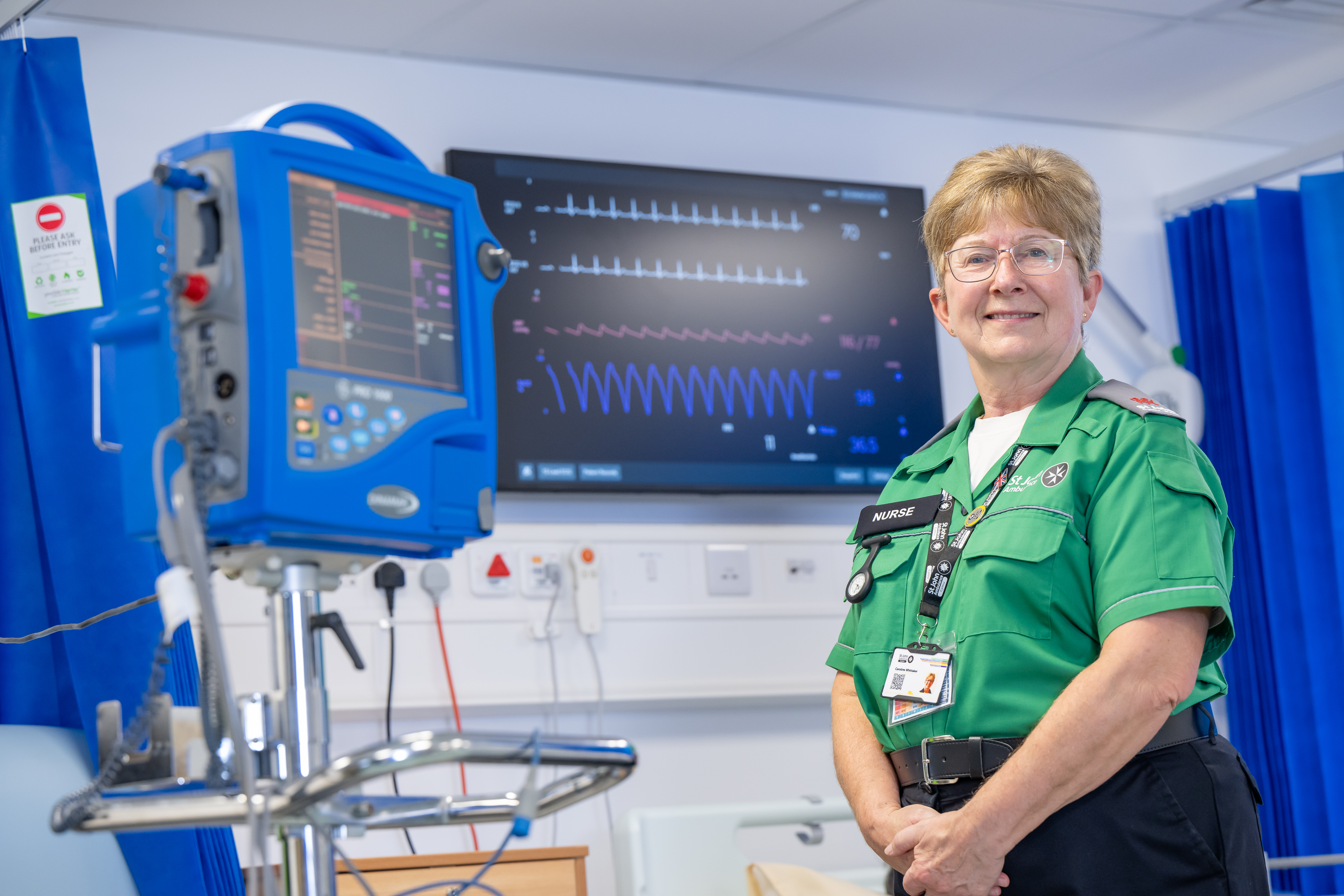
(Caroline in her St John's Abulance volunteers uniform at the Simulation Suite in University Hospital of Wales)
You won the RCN Wales Lifetime Achievement Award in 2021, and you continue to build upon your success. What is next for you?
I am currently an External Examiner (EE) at Robert Gordon University for Occupational Health, SCPHN SN HV and am an External Quality Assessor (EQA) with open awards for the External Examiner Certificate for OH Technicians, of which I was part of the team that wrote it. I will continue as a trainer and volunteer with St John Ambulance.
Despite leaving school without formal qualifications, perseverance and commitment has enabled me to build a strong academic and professional foundation. I achieved a specialist qualification in Occupational Health Nursing, completed a Master’s degree in Public Health, and most recently attained a 90% pass in a Masters‑level module to become a Professional Nurse Advocate. My journey demonstrates that with determination, focus, and resilience, it is possible to progress both personally and professionally.
You’ve had an exceptionally varied career, what would you say has been a guiding constant throughout?
I’ve always sought out opportunities by putting myself forward. The rules I live by are always being honest, being true to yourself and others and never bluff through what you don’t know.


