
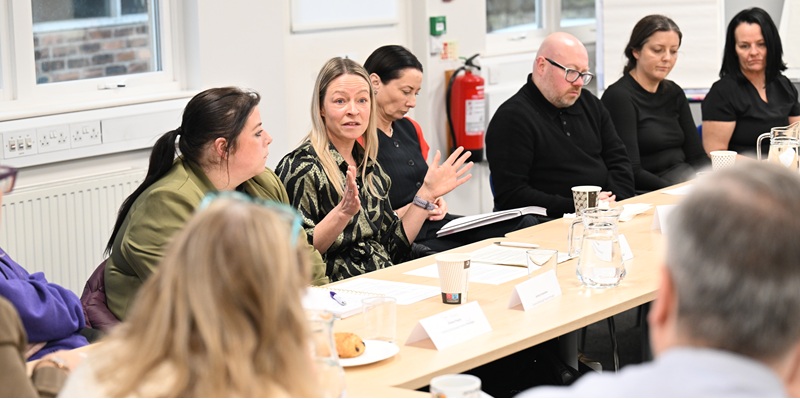
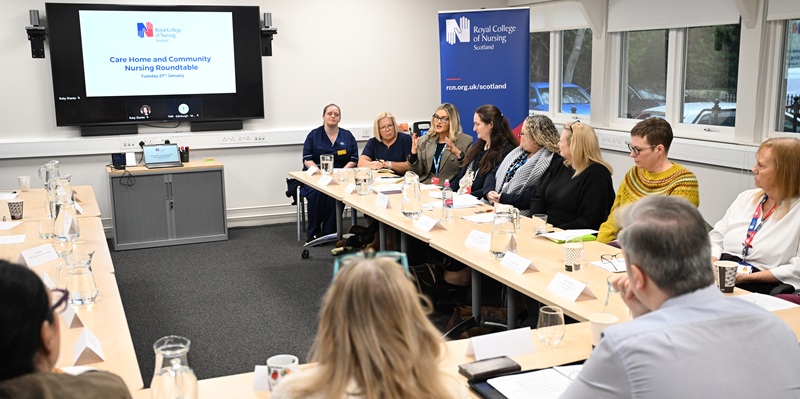
Members from a wide range of services – including district nursing, community nursing, care homes, dementia care and palliative care - took part in the roundtable on Tuesday (27 January). They shared powerful firsthand experiences of the pressures facing nursing teams and emphasised the unique value nursing brings to delivering sustainable, high‑quality health and social care for individuals and communities across Scotland.
They highlighted the key role nursing staff play in providing person centred, holistic and proactive healthcare, which is vital for helping people stay well for as long as possible in a homely setting, whether that is their own home or a care home. This is becoming increasingly important as people live longer, often with more complex health needs and increased frailty.
However, members also highlighted significant challenges. Staff shortages and rising demand mean many services are increasingly forced into reactive, crisis‑driven models of care. This reduces the ability of nursing teams to deliver the preventative, relationship‑based care that they know makes the greatest difference to people’s lives.
Members expressed frustration at the lack of recognition and value placed on nursing in the community, particularly district nursing, and in care homes. They stressed the urgent need to recognise the knowledge and skills of registered nurses within these sectors, improve workforce planning and access to training and development opportunities, ensure pay reflects the complexity and responsibility of these roles, and increase student placement opportunities to support recruitment and retention across these services.
Improved communication and understanding between different parts of the health and social care system was also identified as a key priority to enable more effective, joined‑up care.
Despite the challenges, members’ commitment and passion for nursing was clear throughout the discussion. They agreed that nursing has enormous potential to support the shift in the balance of care into the community, but only if longstanding workforce and resourcing issues are properly addressed.
Commenting, Eileen Mckenna, RCN Scotland Associate Director, said:
“There is an understanding of the ambition to shift the balance of care into the community to better meet people’s needs and ensure services can cope with rising demand. But progress has been too slow.
“To deliver real change, the Scottish government and service leaders must recognise that nursing is central to achieving this ambition.
“Community nursing is already under immense pressure and does not have the capacity to lead this shift without significant investment in workforce and infrastructure. At the same time, despite Scotland’s ageing population and increasing levels of complex health needs, the number of registered nurses in care homes has been falling for a decade.
“These trends are the reverse of what is needed to support people to live well, for longer, in their communities. They also place additional strain across the whole health and care system. It’s not possible to tackle corridor care or hospital overcrowding without increasing capacity in community and care home settings.
“It is vital that the Scottish government backs its ambitions with funded plans to grow the community nursing workforce and support a strong pipeline of registered nurses. Investment in learning, development and career pathways is essential to retain and empower existing staff, and we need social care funding that recognises the need to significantly increase the number of registered nurses working in care homes.”


