
Search results
-

Introduction to RCN Library Services
Discover the library service for RCN members.
Updated: 17 July 2026 -
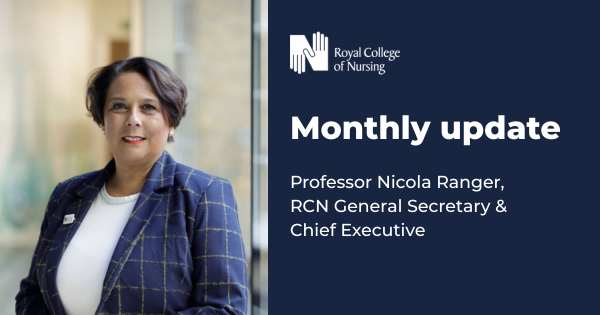
Let’s make fair pay a reality
RCN General Secretary and Chief Executive Professor Nicola Ranger reflects on structural pay reform talks, working in extreme heat and the RCN presidential and Council elections.
Updated: 17 July 2026 -
Government announces ‘significant’ improvement to nursing career progression following RCN talks
RCN General Secretary and Chief Executive, Professor Nicola Ranger, said today’s announcement is significant progress on career progression for nursing staff.
Updated: 19 July 2026 -
Record 12-hour A&E waits show how endemic corridor care is, says RCN
Executive Director of RCN England Patricia Marquis, said: “Nursing staff have been sounding the alarm for far too long about the crisis in our A&E departments. Today’s figures show just how endemic corridor care is and the damage being done to patient care."
Updated: 19 July 2026 -
Excited to join the RCN Diabetes Forum
Diabetes care today looks very different from when I first entered the field 25 years ago. In this blog, I reflect on why education and research matter more than ever, and how nurses can shape the future of diabetes care.
Updated: 18 July 2026 -
One year on from Scotland’s Nursing and Midwifery Taskforce
A year on from the publication of the Ministerial Nursing and Midwifery Taskforce report, RCN Scotland is calling for urgent action from the Scottish government to deliver the change our members were promised.
Updated: 19 July 2026 -

RCN Cumbria Branch meeting: Know your worth (Cumberland Infirmary)
Re-banding the nursing workforce within the NHS is starting with band 5 – but looking at all bands.
Updated: 20 July 2026 -
Job evaluation for RCN representatives (Session 2)
An event for all England representatives.
Updated: 20 July 2026 -
Job evaluation for RCN representatives (Session 3)
An event for all England representatives.
Updated: 20 July 2026 -
 magazines
Empire, racism and the NHS: the history of sickle cell disorder
Dr Grace Redhead explores the vital role nurses played in creating specialist sickle cell services
Updated: 20 July 2026


