When those of us who live in peace think of war, we picture destroyed buildings, overwhelmed hospitals, outbreaks of disease, and the wounded. But beneath the visible devastation lies a quieter, parallel catastrophe: the collapse of nursing education. When universities are dismantled, educators forced to flee, and formal systems shut down, who will train the next generation of nurses? Who will care for patients when no one is being taught how to provide care?
This became Myanmar’s reality on 1 February 2021, when the military staged a coup that plunged the country into deep and ongoing conflict. Civil institutions, including nursing, were pushed into crisis. Nursing education effectively ceased overnight. And yet nursing did not stop.
Out of necessity, it moved underground. In remote regions, informal clinics, and improvised facilities, nurses continued teaching and caring for patients - at extraordinary personal risk.
From this determination emerged an unprecedented initiative: an undergraduate nursing degree designed to survive active conflict. At the RCN, we are so proud to have been involved with this programme.
Yesterday, during a truly special hybrid graduation ceremony - held in Myanmar and live‑streamed to an RCN event in London attended by members of the House of Lords and leading nursing academics - the first cohort of 21 students completed the programme. This would have seemed unimaginable just a few years ago.
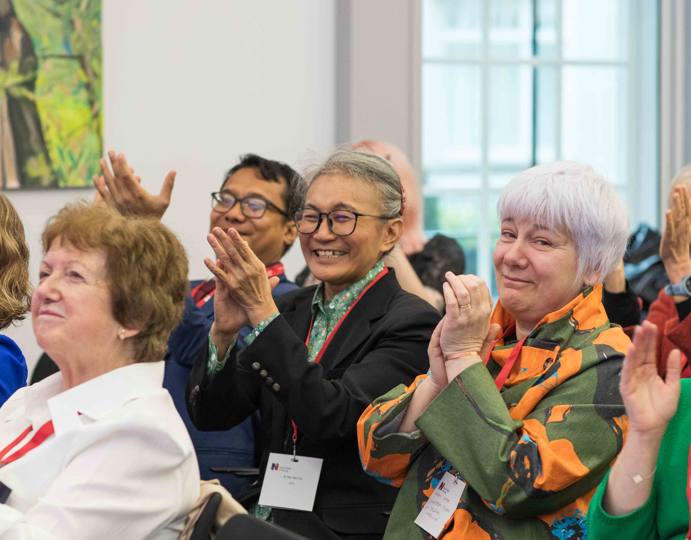
Event attendees in London celebrate Myanmar’s nursing students. For privacy reasons, we could not feature images of the graduation ceremony in Myanmar.
Nursing in the shadows
After the coup, health workers in Myanmar faced an impossible choice: work under a militarised system or refuse and go into hiding. Many nurses joined the Civil Disobedience Movement, risking arrest, disappearance, detention, or even death.
Since then, years of attacks on health facilities, obstruction of medical supplies, and military use of infrastructure have contributed to the near collapse of Myanmar’s health system and violations of medical neutrality.
In the first days after the coup, Myanmar nurses reached out to international colleagues, and the RCN began supporting the extraordinary efforts of hundreds of nurses still caring for patients and training students.
Together with academics and local health leaders in Myanmar - and supported by a large network of international nursing academics and donors - the RCN helped nurses in Myanmar to develop a three year undergraduate nursing degree and a one year bridging programme, both designed for delivery inside active conflict.
This became known as the Phoenix Bachelor of Nursing Science (BNS) - a full undergraduate degree aligned with International Council of Nurses standards and Myanmar’s pre-coup curriculum.
The philosophy is simple: expertise doesn’t always need to be in the room, but nursing cannot be taught by distance learning alone. The programme combines robust recorded lectures with in-person Burmese classroom facilitation and supervised clinical learning in the places where care is most urgently needed.
Myanmar’s nurses have bravely and resourcefully delivered education from hiding, in conflict-affected areas and makeshift clinics, forming a vast parallel health system held together with limited resources and astonishing bravery.
Students have studied in near darkness to avoid detection, moved teaching sites as fighting approached, and completed clinical practice in non-traditional, high-risk settings - jungle hospitals, pop-up clinics, and camps for internally displaced people. It has been an extraordinary undertaking.
The Phoenix programme has now delivered 58 modules, approximately 2,100 hours of recorded teaching, and around 1,500 hours of supervised clinical practice - a total of 3,600 hours of education.
More than 100 additional students are currently enrolled, making this the first programme of its kind worldwide to create a viable pathway to a high quality nursing workforce inside a conflict zone.
It has been a powerful journey. One of the programme graduates recently wrote:
“The name ‘Phoenix’ itself is powerful for us. It symbolises rising from the ashes of the destruction the coup has caused.”
A very special graduation ceremony
A single graduation cannot restore Myanmar’s health system or undo the destruction of universities and regulatory structures. But it proves something profound: degree level nursing education can survive - even thrive - when designed for risk, governed tightly, and led locally. It shows that the hope, compassion, skill and professionalism of a nurse cannot be extinguished by violence.
Yesterday’s hybrid graduation ceremony was a moving testament to that truth. Students and teachers in Myanmar shared powerful speeches describing their journeys. Parents watched proudly as certificates were awarded to their children.
In London, members of the House of Lords, representatives from the International Council of Nurses, Myanmar diaspora groups, and nursing academics gathered to witness this culmination of three years of courage and perseverance.
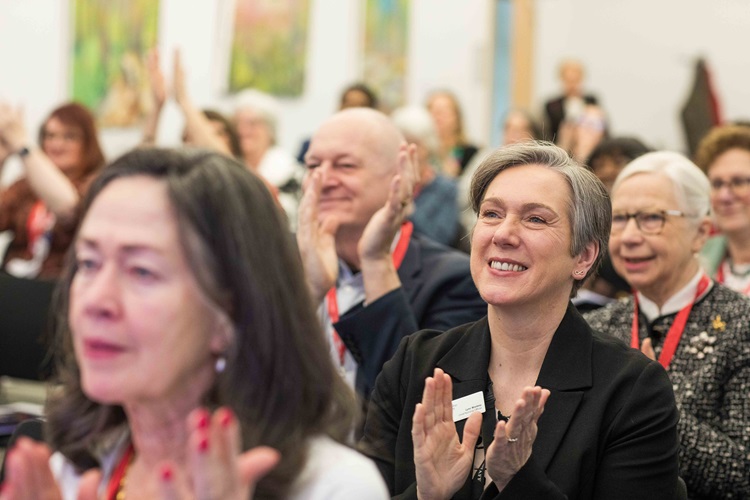
These 21 graduates represent something bigger than a qualification. They are rebuilding the foundations of ethical, compassionate nursing care in Myanmar. They are the living proof that even in the darkest circumstances, nursing - and hope - can rise again.
Read more about the Phoenix Nursing Programme in our ‘Rising from the fire’ report.
Find out more about the RCN International Nursing Academy and how we support nurses working in conflict settings. Our recent report, Care amongst the chaos, shares case studies from Myanmar and other regions where nurses continue to provide care under threat.

 Share on Facebook
 Share on LinkedIn


