Your web browser is outdated and may be insecure

The RCN recommends using an updated browser such as Microsoft Edge or Google Chrome

Member Stories

Learning from member's lived experience of disability & neurodiversity

Hear from disabled and neurodivergent RCN members as they share their experiences of navigating work or university.

From workplace adjustments and career progression to wellbeing and inclusion, their stories offer advice, insight, reassurance, and inspiration.

Aileen's story 


(Work related injury)

Aileen became disabled after injuring her back whilst moving a patient at work. Here she shares her experiences of becoming disabled and her thoughts on the benefits healthcare professionals with lived experience can bring to the workplace.


Key Points

  • Everyone is unique. Listen to colleagues to understand what support works for them, rather than making assumptions or applying a 'one-size-fits-all 'approach.
  • A flexible approach to recruitment and retention can retain skills and experience.
  • Now a retired nurse member of the RCN, Aileen continues to make a valued contribution.
Amelia's story


(ADHD and Dyspraxia)

Amelia has ADHD and Dyspraxia and was diagnosed during her nursing degree. Here she reflects on the challenges of moving from placements to employment and the value of lived experience.


Key Points

  • Moving from university to employment can be challenging.
  • The RCN's Health Ability Passport guide has information on reasonable adjustments.
  • Employers should listen to the lived experience of neurodiverse staff - an inclusive workforce is good for everyone.
  • Joining the peer support service allows you to network with other neurodiverse RCN members. 

Avril's story


(Short Stature)

Avril has been working as a Healthcare Support Worker for 10 years and is also studying to become a nurse. She faces disabling barriers at work due to her height. Being of short stature, her roles in the hospital have been hindered by both the physical environment and attitudes of some colleagues. Avril talks about seeing the person, not the disability in her story.


Key Points

  • Simple reasonable adjustments like lowering facilities and ladders help Avril practically.
  • Open conversations with colleagues can help reduce misunderstandings and challenge assumptions to create a more supportive workplace..
  • Avril is now a role model for colleagues and patients who have seen her career journey.

Fraser's story


(Dyslexia)

After being diagnosed with dyslexia in secondary school, he originally chose a career in the care sector to avoid writing, but soon discovered strengths in nursing and leadership that led him to a rewarding career. He now works as a regulatory compliance manager, and uses his experience of dyslexia to help make care settings more inclusive for everyone.


Key Points

  • Disclosing a disability or neurodiversity can feel challenging, but often leads to better outcomes.
  • Try to identify and focus on strengths rather than limitations. Some of Stuart's strengths included practical skills, supporting others, and problem-solving.
  • Being open about his needs meant his colleagues had a strong understanding of his dyslexia

Hedley's story


(Autism)

Hedley is a Registered Mental Health Nurse who was diagnosed with autism later in life. Throughout his nursing career, he often felt misunderstood, but receiving his diagnosis helped him better understand himself and advocate for the support he needs. He now works as a Clinical Educator - a role that aligns well with his strengths - and his supportive and flexible team helps him to avoid burnout and manage his working environment.

Autism has several alternative labels including Asperger's, Autism Spectrum Condition and Autism Spectrum Disorder, but Hedley identifies with Asperger's.


Key Points

  • Hedley's advice includes being true to yourself. Supportive workplaces reduce the need to 'mask', helping people feel more comfortable and productive.
  • Education is key to supporting our neurodiverse colleagues and embracing their strengths.
  • Peer support can be valuable for people with a disability or neurodiversity. Individuals with more experience like Hedley can give back to others who are earlier on in their journey.
  • Autism has several alternative labels including Asperger's, Autism Spectrum Condition and Autism Spectrum Disorder. Hedley identifies with Asperger's.

Jody's story

(Ehlers-Danlos Syndrome and work related injury)

Jody has Ehlers-Danlos Syndrome (Type 3), a condition that affects multiple body systems and significantly impacts daily life. After a work-related injury meant she could no longer continue in her job, she tried alternative roles, but none were the right fit. Determined to remain in nursing and build on her 30 years of experience, Jody secured a role with a new employer who provided supportive reasonable adjustments, alongside support from the government's Access to Work scheme.


Key Points

  • Jody's new employer's approach (from recruitment to reasonable adjustments) made all the difference.
  • Thanks to her reasonable adjustments, Jody has only taken 1 day off sick all year.
  • Jody's experience is an asset to the profession, and her lived experience of disability enhances her patient care.
  • Jody uses Access to Work, a government scheme to help disabled individuals at work.

Kaynath's story

(Dyslexia)

At the time of making this video, Kaynath was a third year nursing student who was diagnosed with dyslexia at the start of her degree. She shares her experiences and talks about the reasonable adjustments she received, such as being given extra time to record medication administration, getting protected time to complete her nursing evaluations, and being given text to speech software. She also shares her advice for other neurodiverse students.


Key Points

  • Speak to your university's disability support team for advice on getting a formal diagnosis.
  • Processes for disclosing a disability vary depending on your university. Check if and how your needs will be shared with your placement providers automatically.
  • Reasonable adjustments can be expected both at the university and on placements. These are often inexpensive. E.g.  extra time or quiet space to complete tasks for those with dyslexia.
  • Disabled Students Allowance (DSA) might fund additional support like coaching or equipment.
  • Stand up for yourself and recognise the great strengths that you are bringing to nursing.
  • If you are in employment, Access to Work may be able to fund some or all of your reasonable adjustments, even without a formal diagnosis. 

Kirsty's story

(Autism)

Kirsty is a Trainee Advanced Emergency Nurse Practitioner with an MA in Advanced Practice. She spent several years working as nurse before being formally diagnosed with autism. She talks about the benefits of getting a diagnosis, sensory issues, masking, and how her team encourages an inclusive workforce.

Laura's story

(Multiple Sclerosis)

Laura describes how redeployment helped her move into a new role when her MS meant she could no longer carry out all aspects of her previous job. She reflects on how staying in work has supported her wellbeing, enabled her to continue using her skills and experience, and brought benefits not only to her but also to her team and the patients she cares for.


Key Points

  • Support from manager and HR are key to a good redeployment experience.
  • Consider your transferable skills and experience, and be open minded about alternative roles.
  • The Equality Act 2010 (or Disability Discrimination Act 1995 in Northern Ireland) offers protection if you meet the legal definition of 'disabled.'
  • If your health condition progresses, you may need different adjustments.

Lauren's story

(Depression, EUPD, PTSD, and Autism)

Lauren is a Registered Adult Nurse. She is also autistic and has EUPD (Emotionally Unstable Personality Disorder), PTSD (Post Traumatic Stress Disorder) and depression. Lauren recognises the insights her lived experience of mental health and autism bring to nursing and shares how she got the best from her roles through reasonable adjustments.


Key Points

  • Lauren's strengths enhance her nursing roles. She gets into the detail and is patient focused, harnessing her lived experience to improve care.
  • Low cost adjustments such as role flexing, flexibility with timings, and having quiet space/time help Lauren at work. Additionally Lauren identified that part-time work suits her needs best.
  • A supportive line manager has made all the difference for Lauren. Her top tip for employers is to simply take time to listen to staff and ask what adjustments would help.
  • Lauren suggests that knowing when to take time off to support your health is a key skill for staying in work.
  • Lauren is a member of the RCN's Peer Support Service and recommends it for feeling less isolated when ill health or disability are causing challenges for members.

Sammi's story

(Deafness / hearing loss)

Sammi, an RCN Rep, finds that being Deaf makes her an excellent communicator who has changed perceptions at work. In her film, Sammi talks about the reasonable adjustments she has in her role, disclosing a disability during the recruitment process, and what makes an inclusive workplace.


Key Points

  • A modified sickness attendance policy (sometimes referred to as "disability leave") means Sammi isn't penalised for time off related to being Deaf.
  • A positive, solution based approach to interviews works best for Sammi.
  • Line manager support is key and managers should work with staff to get adjustments in place.

Stuart's story


(Right sided weakness)

Stuart has been a Community Mental Health Support Worker for nearly 30 years. He has had right-side weakness and other health issues since birth and uses his lived experience to help other healthcare professionals. In his film, Stuart reflects on the changes he has seen during his career and how much work there is to do to make the health sector truly inclusive.


Key Points

  • A "medical model" perception of disability is still present in healthcare and nursing.
  • Healthcare professionals who are disabled at work can change things by speaking up.
  • It's essential that line managers have access to training and support around reasonable adjustments.
  • We are all individuals and we also need to consider intersectionality when looking at diversity and inclusion.

Tell your story

Sharing your lived experience of having a disability or being neurodivergent can help other members in similar situations. It can also show employers what is possible.

We collect video stories and podcasts. Email peer.support@rcn.org.uk to take part.

How we capture your story

  • Filming takes place remotely using Microsoft Teams.
  • We use an interview approach, asking questions to keep your story flowing.
  • When you begin the interview, the interviewer (generally an RCN Peer Support Service staff member) will go off camera but you will be able to hear them. If you need to lipread they will stay on camera.
  • Your story is edited so that only you are speaking (not the interviewer). You approve the edit before it is shared.
  • To assist in editing, it is helpful if you and the editor try to pause after asking and answering questions.
  • We will publish your video story online and may also share it in full or in part at events and on social media. You sign a release form prior to filming giving permission for this.

Talking about your employer

  • We advise that you don't identify your employer. On these grounds, there is no reason you shouldn't go ahead with telling your story. Some members still let their employer's communications team know as a courtesy.
  • You may want to praise your employer for their support. In this case, let your employer know you are making a video. In larger organisations the communications department will be able to help you. If you're not sure, check with your line manager.
  • Could someone who supported you at work such as an RCN Rep or your manager contribute to your story? This helps us show the process from different perspectives.

What we recommend

  • Wear something you feel comfortable in but avoid busy patterns as these can be distracting on camera.
  • We don't recommend wearing anything that could identify your employer, especially if you are wearing a uniform.
  • Find a quiet space with a neutral background to film.
  • Your head and shoulders should be in shot.
  • If you wear glasses, check that there is not a glare on the lenses from light sources.
  • Take your time and feel free to stop and redo answers if you are not happy with your first response.
  • Some guidance questions are sent to you ahead of the filming to give you an idea of the sorts of things we’ll discuss.
  • This is your story so have a think about what your key messages are and we will make sure to cover them.

Making a podcast or audio recording

  • Record somewhere quiet.
  • Using a set of headphones with an inbuilt microphone, or speaking in to your device mic without interference is recommended.
  • You can use audio recording software on your mobile phone, tablet, laptop or PC. (Many devices have this software already built in.)
  • Your story should be a maximum of 6 minutes long.

What to include

Your story is a chance to share what feels most important to you; to educate and inspire.  

  • Please introduce yourself and your role.
  • You don’t have to share who your employer is if you prefer not to or are not employed.
  • Please tell us how do you refer to yourself (e.g. disabled, differently abled, neurodiverse.)
  • Tell us would be your advice to others in a similar situation.

You may also wish to comment on:

  • One thing that you think that anyone who is interested in being an ally should say/do/be in order to be effective.
  • What makes you feel valued as a nurse (e.g. better pay, recognition, equality of opportunity, etc.)
  • An element of organisational or system change e.g., stronger culture of speaking up, inclusive management.

Where to send it

Once you have finished your recording, simply email it to us at peer.support@rcn.org.uk

In the email please also include:

  • a photo of you that we can publish with your podcast
  • any social media handles you'd like publishing with your podcast/recording
  • your RCN membership number.
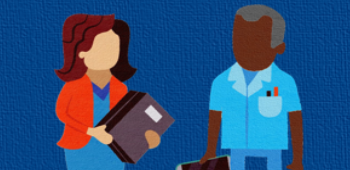
illustration of a nurse in plain clothes and a nurse in scrubs both are carrying files

Health Ability Passports

Read our guidance to documenting reasonable adjustments at work.              
illustration of nurse in wheelchair with speech bubble

Podcasts

Listen to stories from members and find out how to submit your own. 


You are here: Royal College of Nursing / Get Help / Member Support Services (MSS) / Peer Support Service / Member Stories